
Last updated November 2, 2026
 Wrought iron
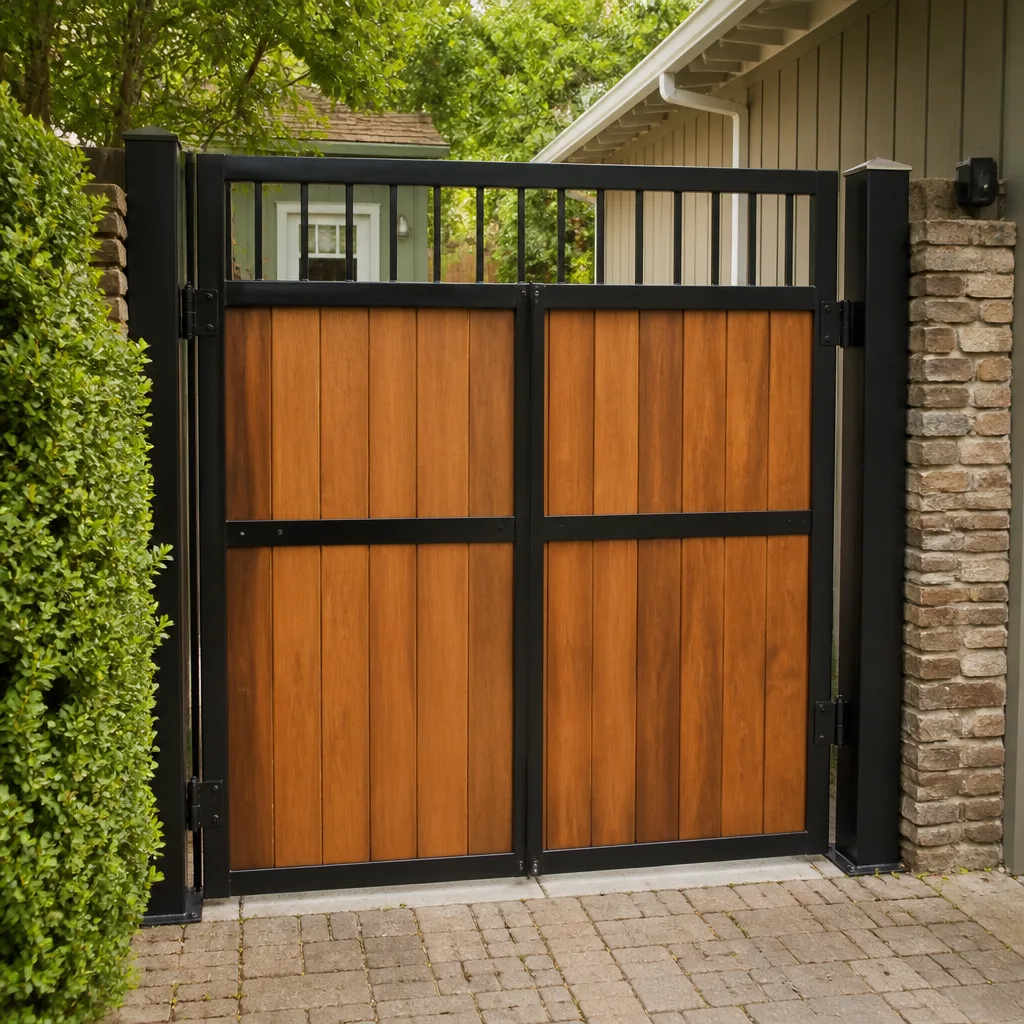 Wood & steel frame
 Farm & ranch
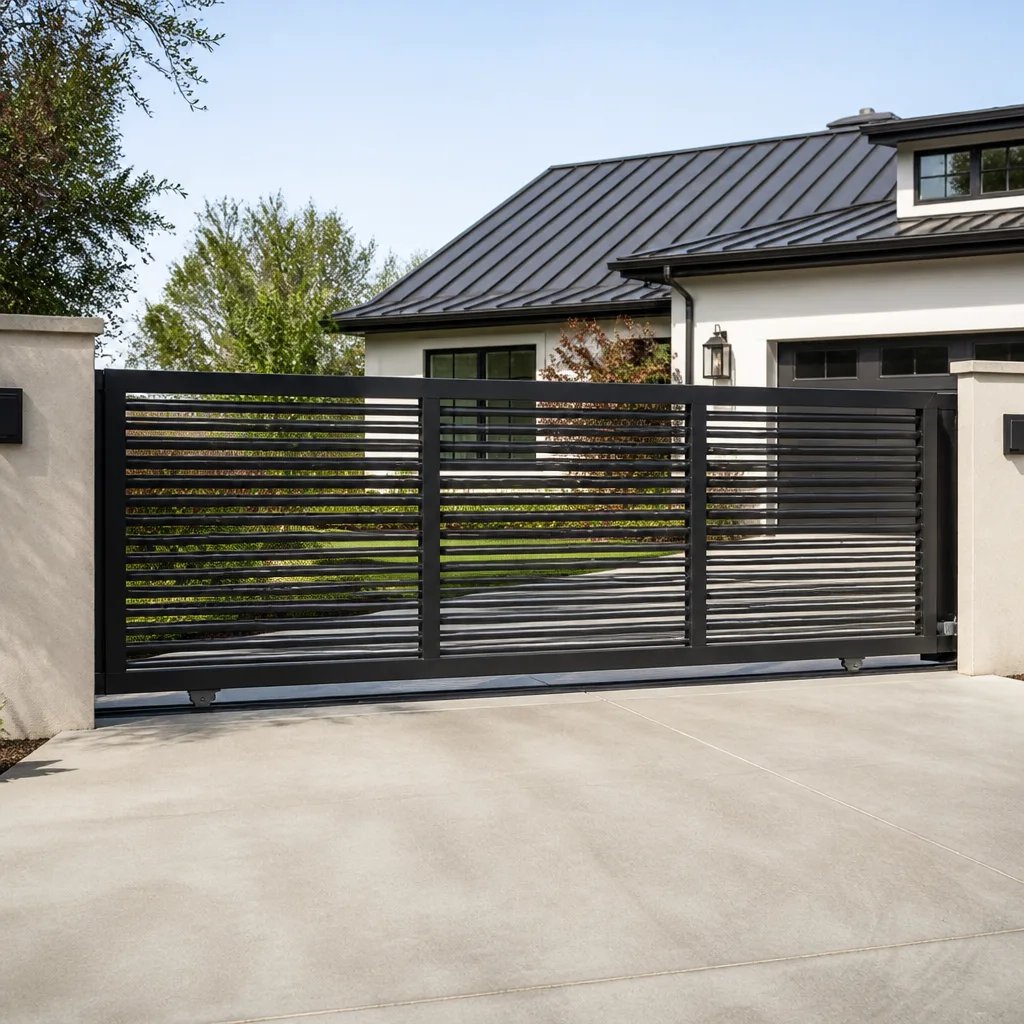 Sliding driveway gates
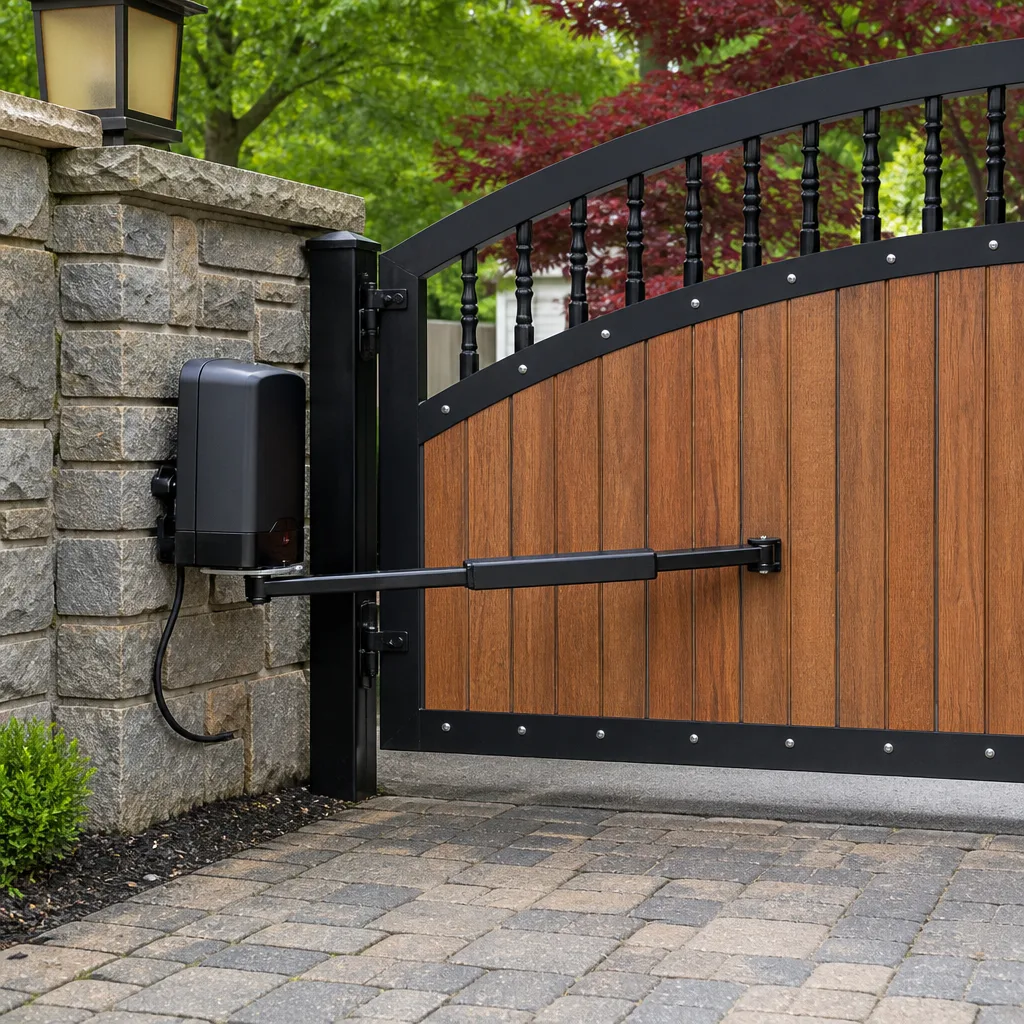 LiftMaster operators
Free on-site gate assessment - hinges, posts, and your LiftMaster or Nice gate operator checked before anything is quoted
The assessment is free and the quote is the invoice.
Get your free estimateSeasonal Gate Repair Care for San Clemente: Year-Round Homeowner’s Guide
The Santa Ana wind events of October and November cause more gate track debris damage and sensor misalignment in San Clemente than the entire rest of the year combined. A gate that coasts through August without complaint will bind, scrape, or refuse to close after the first dry Santa Ana blows through. This guide maps gate care to San Clemente’s actual climate calendar: marine layer moisture, summer UV load, fall wind events, and winter rain cycles. You’ll learn what to inspect each season, what to do about it yourself, and when to call our Gate Repair services for a specialist who works on your brand of operator.
Quick Answer
Seasonal gate care in San Clemente means aligning maintenance with four distinct climate windows, not four generic seasons. In spring you manage marine layer corrosion and inspect hardware after winter rain. In summer you protect seals, boards, and painted steel from UV degradation. In fall you clear Santa Ana debris and verify sensor alignment. In winter you check drainage and conduit after storms. The single most effective step is a 30-day visual check of track, chain, and sensor alignment that takes under five minutes.
Styles & brands we work with
- Wrought iron
- Wood & steel frame
- Farm & ranch
- Sliding driveway gates
- LiftMaster operators
Table of Contents
- Spring Gate Maintenance in San Clemente: Marine Layer and Post-Winter Hardware Inspection
- Summer UV Protection for San Clemente Gates: Seals, Boards, and Coated Steel
- Fall Santa Ana Prep for San Clemente Gates: Debris Clearance and Sensor Alignment
- Winter Rain and Drainage Care for San Clemente Gates
- The 30-Day Check Every San Clemente Gate Owner Should Do
- Common Mistakes to Avoid
- When to Call a Professional
- Frequently Asked Questions
Spring Gate Maintenance in San Clemente: Marine Layer and Post-Winter Hardware Inspection
If you live east of I-5 in neighborhoods like Talega or Forster Ranch, your spring marine layer is thinner and burns off earlier. If you’re west of PCH near Shorecliffs or the Pier Bowl, that gray overcast sits longer and deposits moisture on bare metal every single morning. The distinction matters because corrosion on gate hinges, chain drives, and control board enclosures is not a summer problem in San Clemente; it’s a spring moisture accumulation problem that only becomes visible months later.
Spring is the time to inspect everything the winter rains stressed and the marine layer is now feeding. The sequence should be deliberate. Walk the full path of the gate first, then the operator, then the hardware. Listening matters as much as looking: a gate that squeaks on open but not close is telling you something different than one that groans in both directions.
- Inspect the chain or belt drive for slack. Winter temperature shifts and rain cycles cause metal to expand and contract. A chain that dropped more than half an inch of deflection over winter will slap the guardrail and accelerate sprocket wear. Operators from LiftMaster and BFT have specific tension specs; if you don’t know yours, don’t guess.
- Check hinge weld points on steel swing gates. Salt air and water create rust bloom at the exact point where a hinge plate meets the gate frame. Wire brush any orange bloom, then test the hinge for play. Movement in the hinge means the weld is degrading from the inside.
- Inspect the control board enclosure. Marine layer moisture condenses inside poorly sealed boxes. Look for white residue on terminals, green tint on copper, or any sign the board’s conformal coating is breaking down. Power down the system entirely before opening any enclosure.
- Clear the bottom track on slide gates. Winter runoff carries sand, gravel, and organic debris into the track. San Clemente’s decomposed granite landscapes are worse for this than traditional lawns because the fine material washes readily and settles into every low point.
- Lubricate pivot points with a dry-film lubricant. Avoid grease. Grease attracts the fine dust that blows year-round and turns into an abrasive paste. A dry film penetrates and then sets without becoming a magnet.
We’ve opened more than a few control boxes in San Clemente in March and found the board sitting in a shallow puddle of condensation. That puddle builds through February and March because the marine layer keeps the box cold while the afternoon sun warms the exterior. A properly sealed enclosure with a functioning gasket prevents this. If your gasket is cracked or compressed flat, the board is breathing outside air, and outside air in this city carries salt.
If you find rust, moisture, or slack you can’t correct, a Gate Repair in San Clemente visit now costs less than a motor replacement in August.
Summer UV Protection for San Clemente Gates: Seals, Boards, and Coated Steel
San Clemente summer UV does not announce itself. No dramatic storms, no visible moisture, no wind. It works silently, day after day, on anything plastic, rubber, painted, or electronic. The effect is cumulative and uneven: the west-facing face of a gate or operator takes far more UV than the east, and surfaces that sit in direct afternoon sun degrade differently than shaded ones.
Three things on a San Clemente gate fail from UV exposure before anything mechanical wears out.
Gate seals and weatherstripping. Rubber and vinyl seals crack, shrink, and pull away from the gate frame after two to three summers of direct exposure. On an automatic gate with a safety edge, this is not cosmetic. A degraded safety edge stops sensing properly, and a non-functioning safety edge is a life safety issue, not a convenience issue. Test the safety edge every summer by closing the gate against a firm object (a rolled-up towel works). If the gate doesn’t reverse immediately on contact, do not use the automatic function until a specialist inspects it.
Control boards and circuit boards. Heat degrades capacitors and solder joints inside operator control boards, even when the enclosure shades the board itself. Operators mounted on the west side of a property with no shade canopy run hottest, and boards inside enclosures without ventilation run hotter still. For LiftMaster, FAAC, BFT, and Linear operators alike, the first sign of heat stress is a gate that opens but won’t close, or one that resets intermittently in the late afternoon. If your gate misbehaves only when the sun is on it, suspect thermal stress.
Painted steel and powder coating. San Clemente’s air carries enough salt to make every scratch a rust start point. Summer UV doesn’t cause the scratch, but it accelerates the coating breakdown around it once moisture gets underneath. A six-inch scratch on a powder-coated steel gate can become a six-foot rust patch in two summers if bare metal stays exposed. Touch up chips and scratches in early June, before the driest months bake the exposed surface.
For wood gates common in older San Clemente neighborhoods, the same UV window is when you apply a penetrating sealer. Do it on a morning when the marine layer has burned off and the wood is fully dry. Sealing damp wood traps moisture inside and rots the gate from the core outward.
Electric gate repair in San Clemente during summer means catching thermal and UV failures before they become full board replacements.
Fall Santa Ana Prep for San Clemente Gates: Debris Clearance and Sensor Alignment
In San Clemente, October and November are the repair months for automatic gates. The reason is specific and measurable: Santa Ana wind events carry dry, fine dust and airborne debris from inland, and it settles in exactly the places that make automated systems fail. Track channels, sensor lenses, chain drives, hinge points, and operator cooling vents. Every one of them accumulates material during a wind event.
Fall maintenance is not optional if you have an automatic operator. Here’s the prep sequence, in order of importance:
- Vacuum and clear the full track channel on slide gates. Santa Ana winds push leaves, eucalyptus bark, and fine sand into the track. A track that’s 30 percent filled with debris makes the motor work harder, trip the current-limiting sensor, and eventually burn out the capacitor. We see more slide gate motor strain in November than in any other month.
- Clean photo eye lenses on both sides of the gate opening. Dust film on a photo eye is enough to break the beam and stop the gate mid-cycle. In a Santa Ana, dust accumulates in hours, not weeks. Wipe with a dry microfiber cloth; avoid cleaners that leave a residue.
- Check the safety edge for debris adhesion. Dry conditions with wind-borne dust make rubber safety edges collect a film. Run your hand along the edge; if it feels gritty, clean it with mild soap and water, then dry fully. A dirty safety edge can send false signals to the control board.
- Verify gate stroke and limit settings. Wind load against a large swing or slide gate pushes the gate fractionally past its normal travel. Over enough cycles, the limit switch drifts. If the gate now slams into the end stop or stops short of fully closing, the limits need adjustment. For LiftMaster and FAAC operators, this takes minutes; for a homeowner without brand-specific knowledge, it takes a mistake.
- Inspect chain and belt tension after the first strong wind event. Wind against the gate body loads the drive system in directions it wasn’t designed for. A chain that was properly tensioned in August can be loose by late October.
One fact bears repeating: the Santa Ana season is not when you should first be noticing these things. It’s when you should be confirming that nothing shifted. Prep before the wind, then check after. That’s the San Clemente fall rhythm for any gate owner.
If the wind event already passed and you’re dealing with a gate that stopped working, our San Clemente gate repair team diagnoses most operator faults on the first visit because we stock parts for the systems we service, not a generic barrel of universal brackets.
Winter Rain and Drainage Care for San Clemente Gates
San Clemente winters are mild by any national standard, but rainfall arrives in concentrated bursts. The city gets most of its annual rain between December and March, often in a small number of intense systems. That pattern is harder on gate infrastructure than a steady drizzle. Soil saturates, runoff channels form, and any drainage deficiency around a gate foundation announces itself in a single storm.
The three winter concerns are all about water management.
Underground conduit and low-voltage cable. Automatic gate operator wiring runs through underground conduit from the house or power source to the operator. San Clemente’s coastal soil is not the problem; the problem is what happens when that soil saturates and the conduit has a crack at any joint. Water enters, sits against the insulation, and corrodes the copper inside. The gate still works for weeks after water intrusion because the insulation holds, until the copper has degraded enough to fail. If your gate works normally during dry weather and intermittently after rain, suspect the conduit.
Foundation drainage around the gate post or operator pad. A gate post set in saturated soil shifts. It doesn’t shift dramatically; it moves a quarter inch, which is enough to change the gate angle and make the latch misalign or the close cycle bind. Look for standing water within three feet of any gate post after a storm. If it pools there, consider a drainage channel or regrading. It’s a landscaping fix that prevents a structural repair.
Operator enclosure seal integrity. Winter is when a marginal enclosure gasket fails visibly. Wind-driven rain hits the enclosure at an angle and finds any seam, no matter how small. After each significant storm, open the enclosure and look for moisture. If you see condensation droplets on the inside surface, the enclosure is breathing wet air and the board eventually fails.
For gates that perform year-round, winter is also the right time to schedule any major repair that was identified earlier in the year. The work is easier in cool, dry spells between storms, and you address the issue before the spring marine layer cycle starts again.
If you’re planning a replacement or new install, gate installation in San Clemente is smartest when done between storm cycles, not in the middle of them.
The 30-Day Check Every San Clemente Gate Owner Should Do
Everything above is seasonal. This next part is monthly, and it’s the single highest-return maintenance habit you can form. It takes under five minutes and catches most problems before they become repair calls.
We recommend doing this on the first weekend of every month, same time as you check smoke detector batteries. It works for manual and automatic gates, swing and slide, every brand.
- Stand at the gate and watch one full open-and-close cycle. You’re looking for jerky movement, slowing, hesitation, or unusual noise. A gate that hesitates at the same point every cycle is telling you where the problem lives.
- Listen for new sounds. A grind that wasn’t there last month is a mechanical issue starting. A hum with no movement is an electrical issue. Both are cheaper to fix now than next month.
- Look at the chain or belt for visible slack. If it dips noticeably or shows rust, flag it for service.
- Check the photo eye lenses are clean and aligned. Dust builds up faster in San Clemente than most homeowners realize because of the dry inland wind mixing with coastal salt air.
- Test the safety edge by closing the gate against a firm object. If it doesn’t reverse instantly, the automatic function is unsafe and should not be used until a specialist inspects it.
That’s it. Five steps. Five minutes. It works on a LiftMaster slide operator, a Ghost Controls residential swing kit, a BFT commercial hydraulic arm, or any other system. The point is consistency, not complexity.
Common Mistakes to Avoid
- Lubricating without cleaning first. Adding lubricant to a dirty chain or hinge creates a grinding paste that accelerates wear. Clean first, then lubricate with a dry-film product appropriate for your system.
- Assuming “manual gate” means “no maintenance.” Manual gates have hinges, latch points, and tracks too. They wear, and a manual gate that binds wears faster every time someone shoves it harder.
- Ignoring a gate that still opens. A gate that opens slowly, grinds, or stops midway is broadcasting that something is failing. Waiting until it fully stops turns a $180 repair into a $900 motor replacement.
- Pressure washing near the operator or control box. Every spring, well-meaning homeowners blast the driveway and gate area, forcing water into sealed enclosures that are only sealed against rain, not directed pressure. Water intrusion into a control board is frequently fatal to the board.
- Spraying lubricant on photo eyes or sensors. It leaves a film that dust adheres to, which defeats the sensor within a week in San Clemente’s dry air.
- Adjusting limit settings without knowing the brand-specific procedure. A limit switch set wrong can drive a gate past its mechanical stop and bend the chain, bracket, or gate frame. The fix for a wrong limit adjustment is usually a repair bill.
- Waiting until fall to think about Santa Ana prep. The best window to prepare is late September, before the first wind event. Once the wind starts, you’re reacting, not preparing.
When to Call a Professional
Call a specialist when the gate makes a new mechanical noise, when the safety edge fails to reverse on contact, when the control board shows signs of water intrusion or corrosion, or when the gate stops responding to remotes and keypads. Also call when you don’t know the tension spec for your operator’s chain or belt, or when adjusting limits feels uncertain. These are not areas to experiment. For guidance on selecting qualified help, see Choosing the Right Gate Repair Brand: A Buyer’s Guide for San Clemente. Gate Repair San Clemente services electric and manual gate systems across nine major brands including LiftMaster, FAAC, BFT, and Linear, and we diagnose by brand, not by trial. Gate Repair San Clemente offers free estimates in San Clemente – call (866) 282-7403.
Frequently Asked Questions
For automatic gates in San Clemente, an annual professional service is the baseline, with the ideal timing in early fall before Santa Ana season begins. Manual gates need a professional inspection every two to three years unless you notice binding, sagging, or latch problems earlier. Coastal properties west of PCH should lean toward more frequent service because salt air accelerates corrosion on hardware and electrical contacts. Call (866) 282-7403 to schedule a service visit; estimates are free.
Basic seasonal gate maintenance in San Clemente typically runs $120 to $250, depending on the number of gates, the operator brand, and whether the system is manual or automatic. Major repairs like board replacement, motor replacement, or track realignment can run higher, but the quote is always agreed before any work starts. We don’t invoice blind. Call (866) 282-7403 for an exact number on your system.
Most operator faults on LiftMaster, FAAC, BFT, or Linear systems can be repaired same day when we’re already working in San Clemente. Because we stock brand-specific parts, we’re not waiting on a parts delivery or improvising with universal components. Call (866) 282-7403 early in the day for best same-day availability.
Yes. We service Ghost Controls and Mighty Mule residential operators in addition to LiftMaster, FAAC, BFT, Linear, Viking, DoorKing, and Elite. Entry-level and professional systems use different components and different installation standards, and we work on both without treating one like the other.
Intermittent rain-related gate failures usually point to water intrusion in the underground conduit, a failed enclosure gasket, or a poor electrical connection feeding the operator. In San Clemente’s concentrated winter storms, saturated soil finds the crack that dry soil hides. This is a progressive problem that gets worse with each wet cycle. Call (866) 282-7403 and we’ll trace the wiring path, not just replace parts.
The monthly five-minute check: watch a full gate cycle, listen for new sounds, check chain slack, clean photo eyes, and test the safety edge. Consistency on that single routine prevents more San Clemente gate failures than any seasonal project. Do it on the first weekend of every month and you’ll catch problems weeks or months before they become breakdowns.
The Bottom Line
San Clemente gates fail on a predictable pattern tied to the city’s actual weather, not a generic four-season calendar. Spring marine layer moisture feeds corrosion. Summer UV destroys seals, boards, and coatings. Santa Ana winds in fall fill tracks and dirty sensors. Winter storms test drainage and conduit integrity. If you align maintenance with those windows and keep up the monthly five-minute check, your gate will run clean for years longer. When something does fail, we work on your brand, not around it.
Written by the team at Gate Repair San Clemente, serving San Clemente since 2012. Explore more guides & resources on gate maintenance and repair.
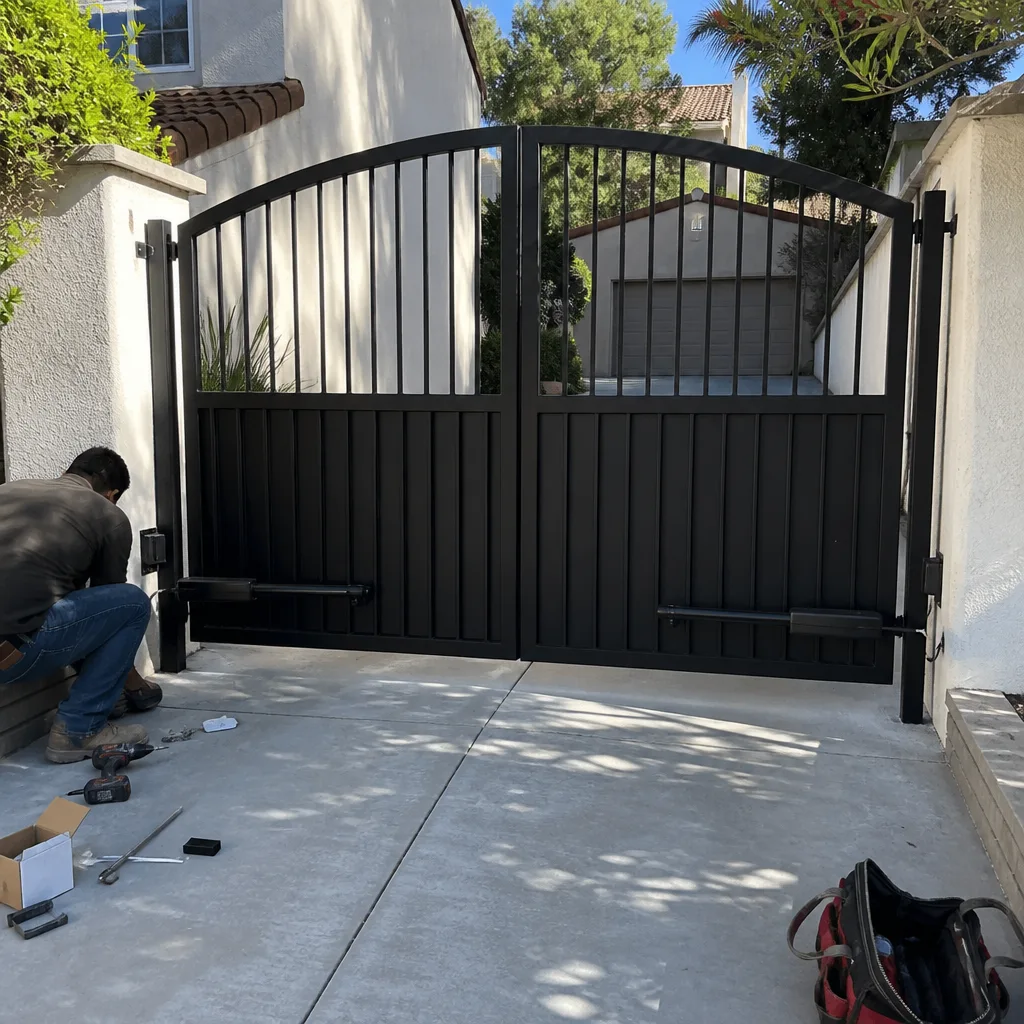
See the difference
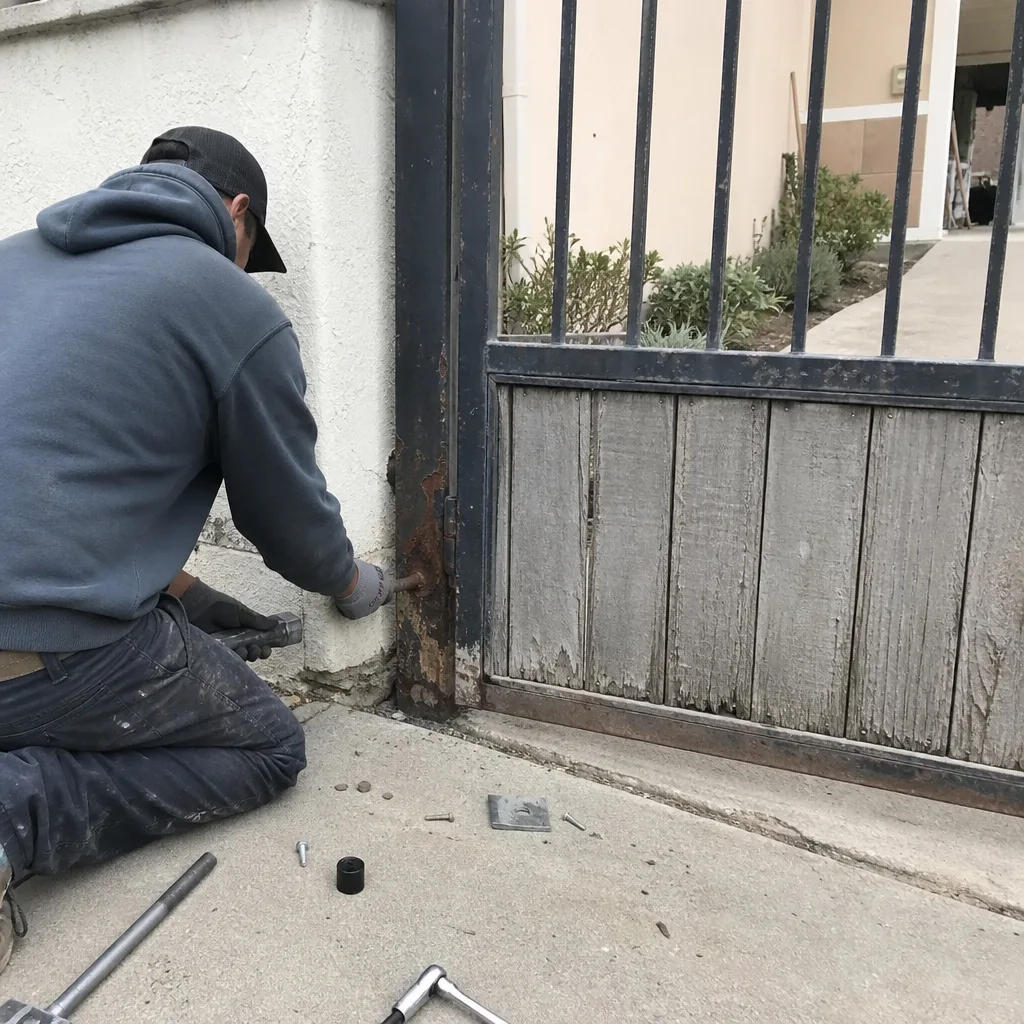 Before
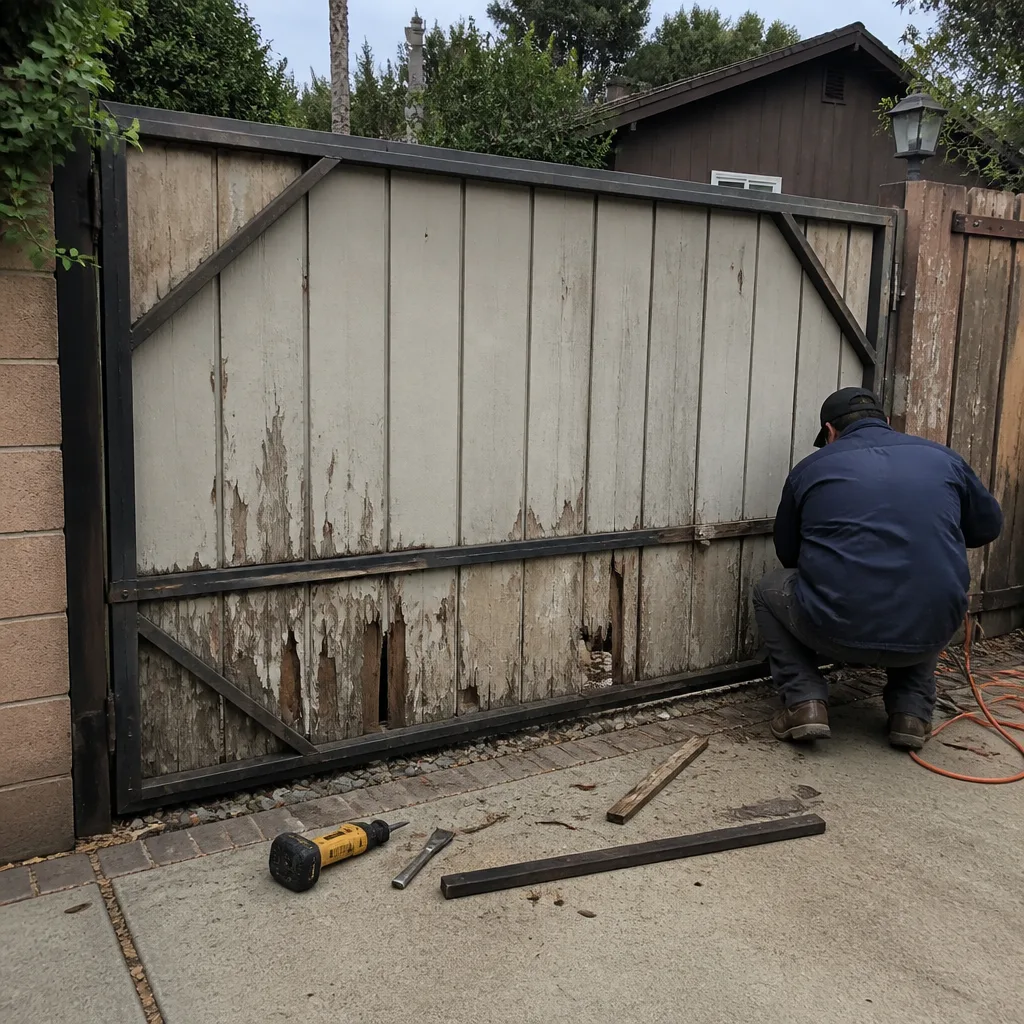
 After
 Before
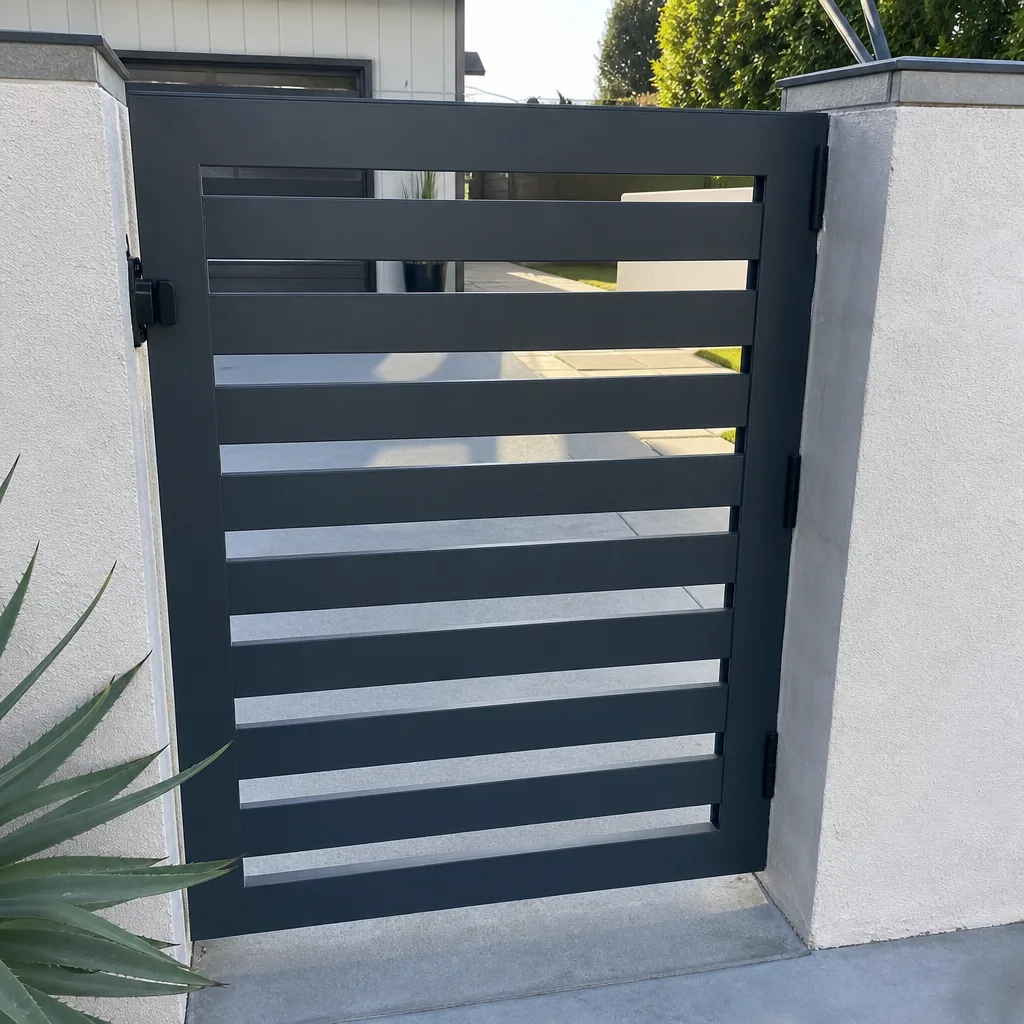 After
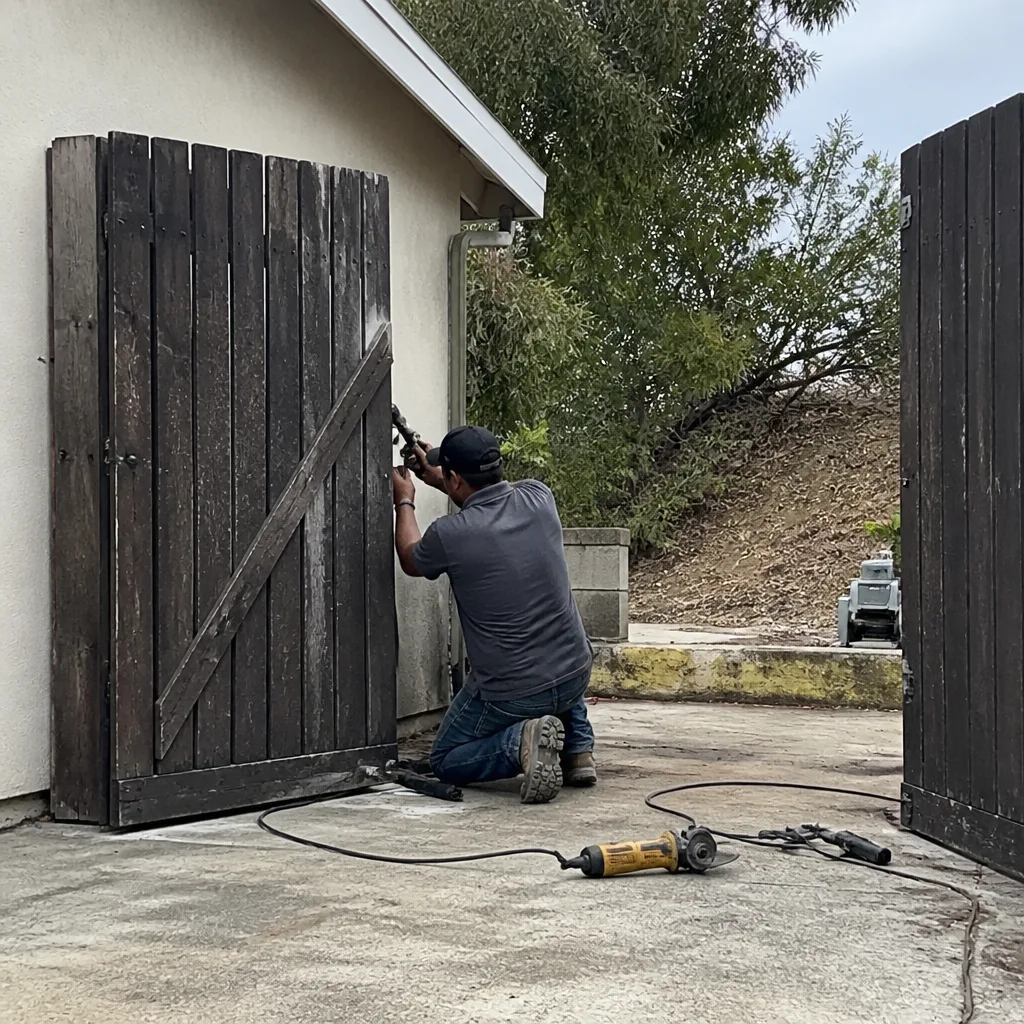 Before
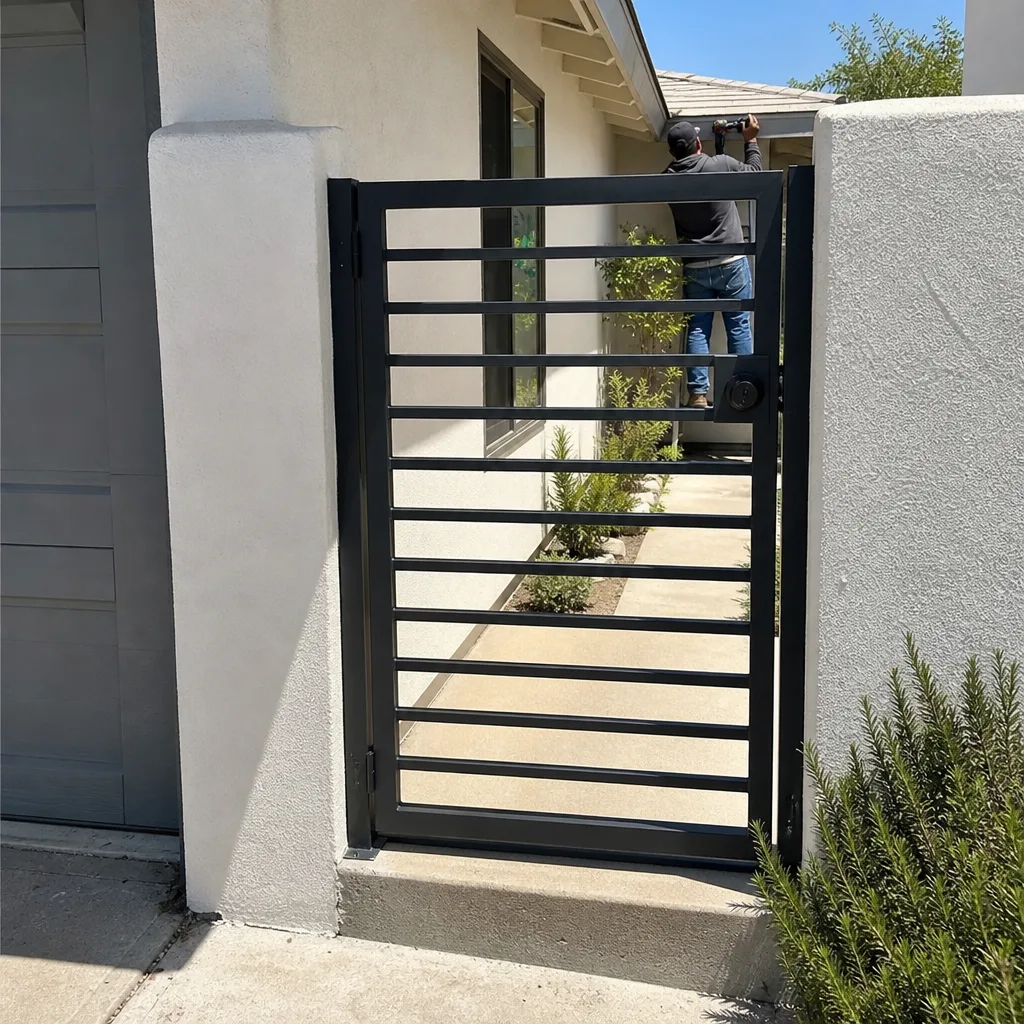 After