
Last updated November 2, 2026
 Wrought iron
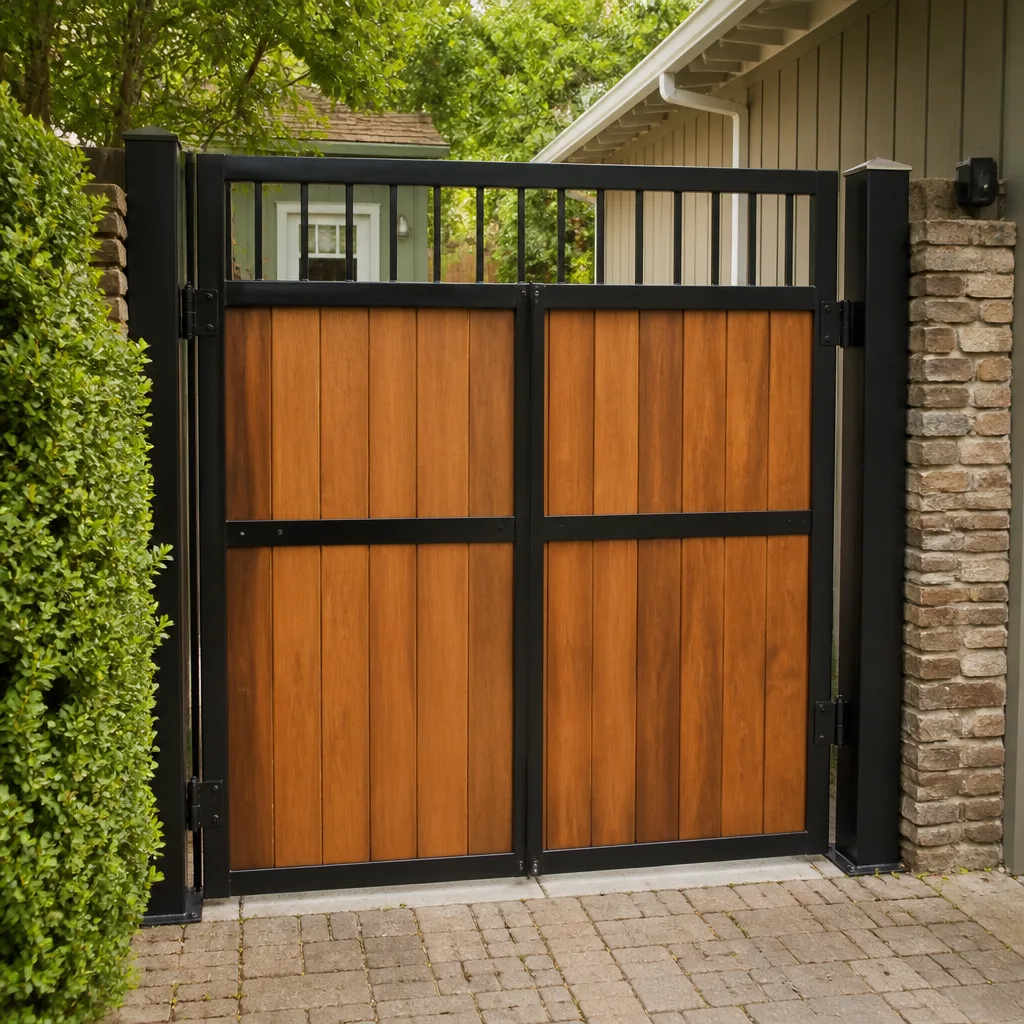 Wood & steel frame
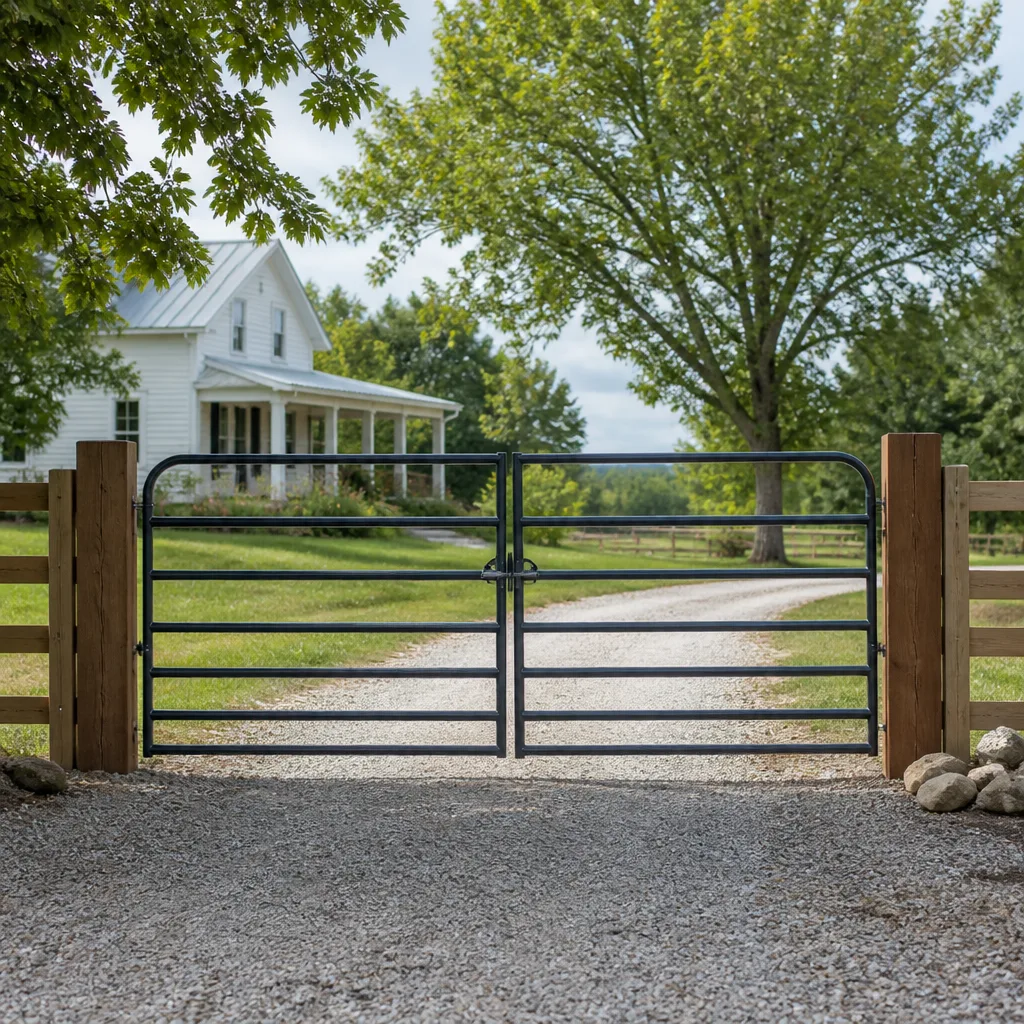 Farm & ranch
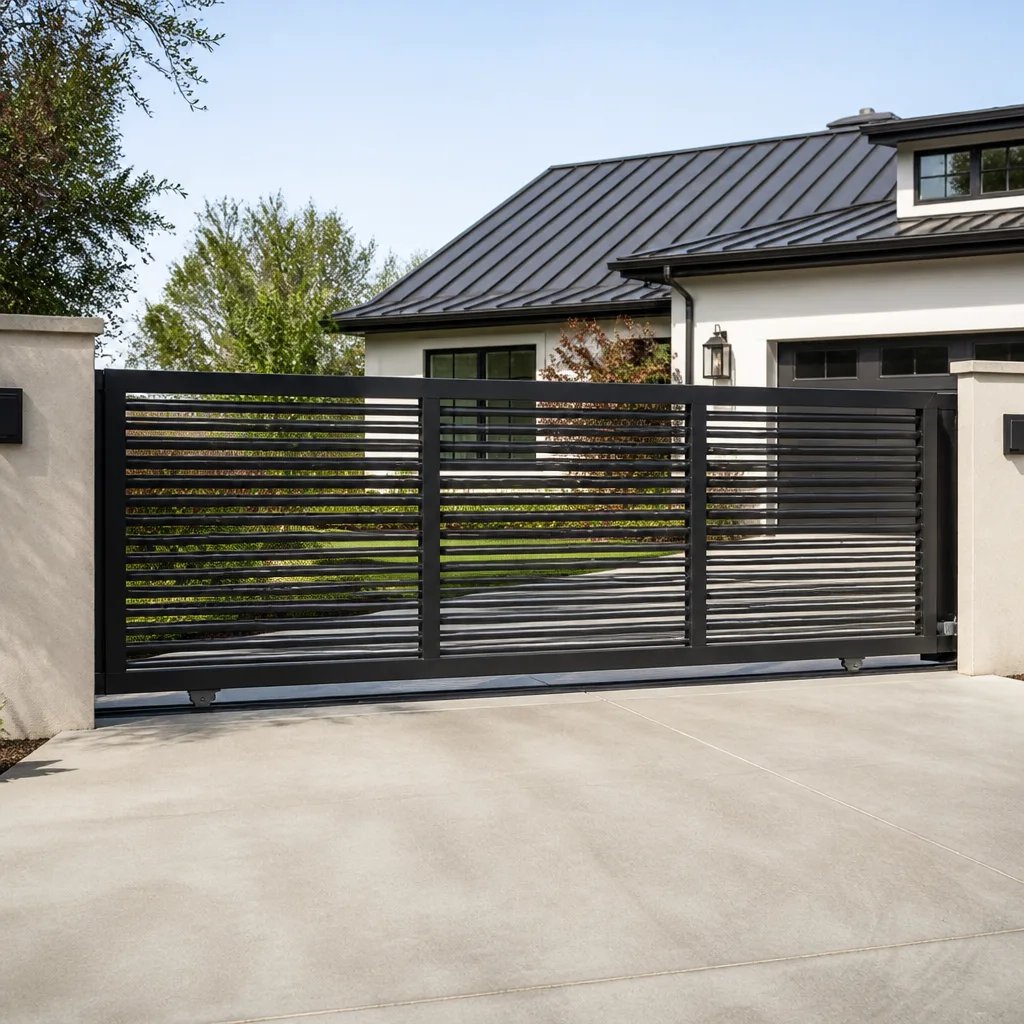 Sliding driveway gates
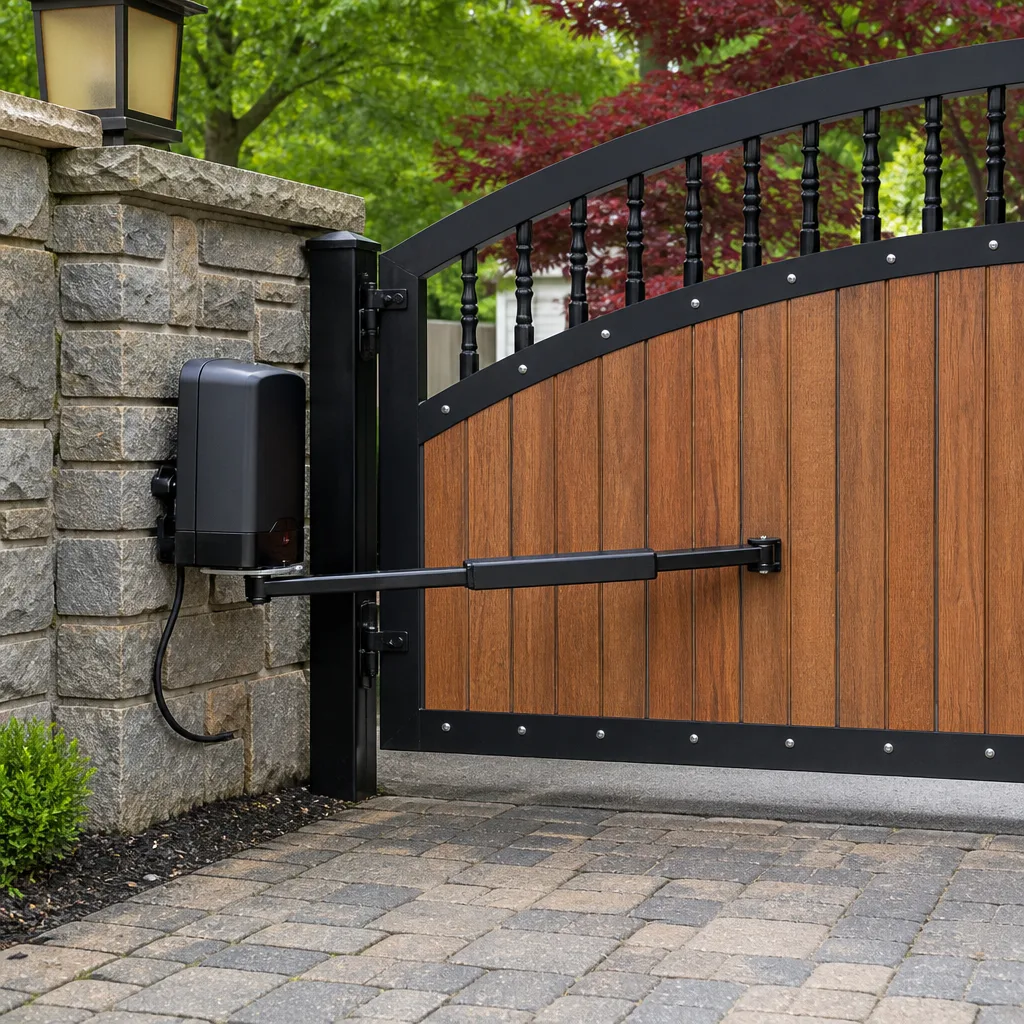 LiftMaster operators
Free on-site gate assessment - hinges, posts, and your LiftMaster or Nice gate operator checked before anything is quoted
The assessment is free and the quote is the invoice.
Get your free estimateDIY vs Professional Gate Repair: The San Clemente Homeowner’s Decision Guide
Adjusting a gate’s limit switches yourself is legal, safe, and takes about 20 minutes. Rewiring the same gate’s transformer output crosses into work that requires a C-10 electrical license in California, and your homeowner’s insurance may not cover damage from unlicensed electrical work on that line-voltage side. The line between what a San Clemente homeowner can safely handle and what needs a licensed pro isn’t about how handy you are. It’s drawn at voltage class, and it’s drawn by state law. This guide maps exactly where your DIY authority begins and ends, which repairs look easy but have injured people, and what a warranty or insurance adjuster will ask if something goes wrong. For professional help, see our Gate Repair services.
Quick Answer
For low-voltage work on 12V or 24V DC components like limit switches, photo eyes, and remote programming, a San Clemente homeowner with a multimeter and the install manual can handle most adjustments legally and safely. For anything touching 120V line voltage, spring tension assemblies, or underground loop infrastructure, call a licensed professional. The cost difference between a botched DIY repair and a professional gate repair in San Clemente is measured in thousands, not hundreds.
Styles & brands we work with
- Wrought iron
- Wood & steel frame
- Farm & ranch
- Sliding driveway gates
- LiftMaster operators
Table of Contents
- The Voltage-Class Framework: Where DIY Legally Ends
- Five Gate Repairs That Look Simple but Have Injured DIYers
- What Legitimate DIY Gate Repair Actually Requires
- How a DIY Repair Attempt Affects Your Operator Warranty
- Liability Exposure: What Homeowner’s Insurance Actually Covers
- DIY vs Professional: Real Cost Comparison in San Clemente
- Common Mistakes to Avoid
- When to Call a Professional
- Frequently Asked Questions
The Voltage-Class Framework: Where DIY Legally Ends
The Electrical Contractors’ State License Board draws the line at 120 volts. That’s not a suggestion. California Code of Regulations, Title 8, Section 2900 requires a C-10 electrical license held by an employee or contractor for any electrical work on systems operating at 100 volt-amps or more that involves fixed wiring. Homeowners get an exception for their own residence under California Civil Code 1217, but that exception evaporates the moment something goes wrong and an insurance claim or injury is involved. The practical line for gate systems is simpler than legalese: everything downstream of the transformer is yours. Everything upstream is not.
Here’s the framework we use when a San Clemente homeowner calls and asks whether they should touch it themselves:
- 12V or 24V DC components (DIY-accessible): Limit switches, photo eyes/safety sensors, keypad remotes, receiver programming, battery replacement on backup units, hinge lubrication, wheel alignment on slide gates, control board diagnostics via LED blink codes.
- 120V AC line voltage (licensed professional required): Transformer replacement and primary-side wiring, motor capacitor replacement, any hardwired connection to the home’s electrical panel, above-ground or underground conduit runs from the panel to the operator.
- Mechanical energy storage (professional strongly recommended): Torsion springs on swing gates, counterweight systems, tension rods on cantilever slide gates, any component under load that can release suddenly.
- Ground infrastructure (professional required): Underground loop detectors, wiring trenches, PVC conduit under driveways, any buried cable repair.
The reason the voltage line matters so much in San Clemente specifically comes down to coastal humidity and salt air. Low-voltage connections corrode faster here than they do in Ladera Ranch or Mission Viejo because marine layer moisture gets into every exposed terminal block. A homeowner checking a photo eye connection with a multimeter is the kind of maintenance that prevents a service call. But the same corrosion that makes low-voltage accessories fail also accelerates insulation breakdown on line-voltage wiring, and that’s not something to probe with the power on.
For an even broader look at what a specialist covers versus what a generalist might attempt, start with the Gate Repair San Clemente home page and work through the service scope from there.
Five Gate Repairs That Look Simple but Have Injured DIYers
Every gate technician in Southern California has a story about a homeowner who tried one of these and ended up needing an ambulance. None of these are hypothetical. We’ve seen the aftermath in San Clemente driveways from Shorecliffs to Talega.
- Spring tension adjustment on swing gates. A torsion spring on a 600-pound ornamental steel gate stores enough energy to break bones if the winding bar slips. The spring doesn’t care how many YouTube videos you watched. If your grip shifts one degree while under load, the bar becomes a projectile. This isn’t a “be careful” situation. It’s a “do not touch” situation, and it’s the number one injury source on residential gate failures.
- Underground loop detector repair. A driveway loop that stops detecting cars means digging into the asphalt or concrete at the exact spot where the loop was originally buried. Many San Clemente homeowners don’t realize the loop wires run through a saw-cut in the concrete, not just under loose soil. Digging without a locate means risking the 120V line to the operator that’s often buried in the same trench. Not worth a shattered shovel or worse.
- Motor capacitor replacement. A capacitor holds a charge even after the breaker’s off. A 40-microfarad capacitor on a slide gate motor can deliver enough of a jolt to stop a heart. And if the capacitor is swollen or leaking, that’s a sign of a deeper motor winding problem that a new capacitor won’t fix anyway.
- Overhead or tall cantilever gate roller replacement. Cantilever gates ride on rollers that carry the full weight of a gate that’s often 20 to 30 feet long. Loosening the wrong bolt first means the gate drops. If your hand or head is under it, that’s a crush injury. The gate doesn’t need to be electric to be dangerous.
- Wire-to-wire re-splicing without a meter. We see this on virtually every second or third repair where a homeowner tried a fix first: four wires, three colors, and a splice job that bypassed a limit switch. The gate works for a week, then slams into the post and burns the motor. A multimeter and a color-coded diagram solve this in ten minutes if you know the brand. Guessing doesn’t.
None of this is said to scare a homeowner away from legitimate maintenance. It’s to draw the line between work that’s humble and work that hurts. Greasing hinges is humble. Winding springs is not.
What Legitimate DIY Gate Repair Actually Requires
Most install manuals cover the safe, accessible maintenance tasks. The problem is that manuals degrade, get lost, or end up in a drawer with the wrong model’s code chart. Here’s what you actually need before touching even a low-voltage component:
- A digital multimeter that reads DC voltage in the 0-30V range. Not optional. If you can’t verify that a photo eye is receiving 24V DC, you’re changing parts blind. A quality meter costs $40 to $80 at any San Clemente hardware store.
- The model-specific installation manual. Not the warranty card. Not a random PDF for a similar operator. Limit switch logic varies between a Mighty Mule 500 and a LiftMaster LA400. If you don’t have the exact manual, don’t guess the wiring.
- A set of insulated screwdrivers and a non-contact voltage tester. Even for low-voltage work, the non-contact tester confirms the transformer is unplugged or the breaker is off before you start. It’s a $20 insurance policy against a mistake you won’t make twice.
- Wire strippers, crimp connectors, and heat-shrink tubing rated for outdoor use. Blue wire nuts taped with electrical tape are how San Clemente gate failures happen six months after a repair. Salt air corrodes open copper fast. Crimp connectors with adhesive-lined heat shrink are the minimum standard for any outdoor splice.
- Time and daylight. A limit switch adjustment at 8pm on a Tuesday with a headlamp is how wires get crossed. If you can’t finish the job in daylight and with the manual open, wait.
What you won’t have, and what genuinely separates a pro from a motivated homeowner on low-voltage work, is brand-specific diagnostic memory. We know that a FAAC 740 with three flashing LED blinks means the reversing edge circuit is open. We know that a BFT Deimos with a dead keypad usually means the 24V supply from the control board has died, not the keypad itself. A manual explains how to test. It doesn’t tell you what the test result means in the context of ten other possible faults.
How a DIY Repair Attempt Affects Your Operator Warranty
Most gate operator warranties are written to expire the moment a non-authorized person opens the control board enclosure. That’s not our policy; that’s the paperwork from the manufacturers. A Mighty Mule warranty, for example, covers defects in materials and workmanship only when installation and service are performed by a qualified installer. LiftMaster’s commercial operator warranties have similar language, and so does FAAC’s residential line.
What happens in practice is less clear-cut than the warranty language implies. If you replace a battery and later make a warranty claim, no one will likely audit your service history over a battery swap. But if the failure involves the control board, the motor, or the transformer, and the manufacturer sees signs of tampering (cut zip ties, re-crimped connectors, a board that was clearly pulled and re-seated), the claim will likely be denied. The manufacturer’s position is defensible: they can’t verify whether the DIY attempt caused the subsequent failure.
For San Clemente homeowners with an operator still under coverage, the calculus is straightforward. A DIY repair that voids a 2-year motor warranty on a commercial-grade slide operator isn’t saving money; it’s trading a zero-dollar warranty replacement for the cost of a new motor and gear assembly. That’s a $600 to $1,200 decision on the wrong side of the ledger.
If the operator is out of warranty, the calculation shifts. Low-voltage fixes on out-of-warranty residential units are genuinely reasonable DIY territory, especially on entry-level systems like Mighty Mule or Ghost Controls where the replacement part is cheap and the control logic is simple. We tell homeowners this directly. There’s no point in paying a service call fee for a $35 limit switch replacement on a $400 operator that’s nine years old.
The right answer isn’t “always call a pro” any more than it’s “always do it yourself.” The right answer is know when the warranty still matters, know when it doesn’t, and match your risk to the operator’s age and class.
Liability Exposure: What Homeowner’s Insurance Actually Covers
Here’s the part that most DIY gate repair content glosses over, and it’s the part that matters most in California. If you repair your own gate and that gate later injures someone, your homeowner’s insurance company will investigate. If the investigation finds that the injury resulted from your repair work, they can deny the liability portion of the claim and leave you personally exposed.
A standard HO-3 policy in California covers “accidental” physical injury on the property. The key word is accidental. An injury caused by a gate that was improperly wired or had its safety reversing mechanism disabled is not accidental in the insurer’s eyes; it’s foreseeable. Insurers don’t often deny claims solely because a homeowner did work without a license, but they do deny claims when the work created the hazard.
What does this look like in practice?
- Photo eye bypassed or misaligned during a DIY repair. A child is in the path when the gate closes. The injury claim is likely covered, but the insurer may subrogate against the homeowner if the photo eye was the homeowner’s work. Subrogation means you’re paying.
- Limit switch misadjusted so the gate slams into its end stop. Six months later, the motor burns out and the gate falls off its track onto a car. If the initial misadjustment was yours, the claim investigation will find it.
- 120V wiring spliced without a license. A neighbor’s kid touches the gate post and gets shocked. Even if the shock is minor, the claim will trigger a code compliance review. Unlicensed line-voltage work at the point of injury is a near-automatic liability finding.
The liability risk is why we say the voltage line matters more than the skill line. A San Clemente homeowner who rewires a photo eye at 24V DC and gets it wrong will probably have a gate that doesn’t close. A homeowner who opens a transformer box and rewires a 120V primary will have a worse problem. One is a mistake. The other is a claim.
DIY vs Professional: Real Cost Comparison in San Clemente
People imagine professional gate repair is more expensive than it actually is, and they imagine DIY is cheaper than it actually is. The truth flips around the clock. Here’s the actual math for common San Clemente scenarios as of 2026:
| Repair | DIY Cost (Parts Only) | Professional Cost (Parts + Labor) | Time (DIY) | Time (Pro) |
|---|---|---|---|---|
| Limit switch adjustment (12V/24V) | $0-$15 (if tools already owned) | $95-$165 | 45-60 min | 20-30 min on site |
| Photo eye replacement | $35-$90 (part) | $140-$240 | 1.5-2 hrs | 45 min |
| Remote programming | $0 (manual + existing remote) | $55-$95 | 15-30 min | 10-15 min |
| Motor capacitor replacement | $25-$50 (part) | $180-$320 | 1-2 hrs (dangerous if done wrong) | 45 min (with power verification) |
| Full operator replacement (residential slide) | $800-$1,400 (operator only) | $2,200-$3,800 (installed, warranted) | 1-2 days (plus permitting questions) | 3-5 hours |
| Underground loop repair | $100-$200 (saw rental + wire, high failure risk) | $450-$900 | 1 full day, uncertain outcome | 2-4 hours with locate equipment |
The table makes the pattern obvious. The cheap, fast, low-voltage items favor DIY when you have the tools and the manual. The expensive, slow, or dangerous items favor a pro, especially when the cost of failure gets multiplied by a gate that still doesn’t close properly and a spouse who has to wait three more days for the actual fix.
We also see a San Clemente-specific cost driver most guides ignore: salt-air corrosion means “just replace the part” often fails because the mounting hardware crumbles on removal. A professional tech carries stainless steel replacements. A homeowner who strips a corroded bolt on a Saturday afternoon now has a gate that’s off its hinges and a hardware run to three stores on Sunday.
Common Mistakes to Avoid
- Assuming all gate work is low-voltage because the motor runs on a battery. Battery-backup operators still have a 120V AC transformer feeding the battery charger. The battery side is safe; the transformer side is not. San Clemente homes with whole-home surge protection and newer panels often have cleaner line voltage, which means less reason to touch the transformer at all.
- Replacing parts before running diagnostics. The most expensive DIY repair is the one that doesn’t fix the problem. If you change a photo eye and the gate still doesn’t close, you’ve spent $90 to confirm the photo eye wasn’t the fault. A multimeter reading confirms it for free before the parts order.
- Ignoring the manual’s safety-reversing test after any adjustment. Every operator manual includes a safety-reversing force test. Almost no homeowner runs it after a DIY limit adjustment. The result is a gate that closes too hard and a photo eye that gets bypassed in function if not in wiring. This is exactly the scenario insurers look for after an injury.
- Trying to salvage old wiring with new splices. If the existing wire jacket is brittle and corroded from years of San Clemente salt air, a splice only moves the failure point six inches downstream. The correct fix is a new wire run, which usually means conduit work. That’s professional territory.
- Buying a universal replacement board and hoping it works. Universal boards are a compromise on every operator they’re installed in. A LiftMaster board replacement that uses a generic third-party board will lose brand-specific features and may not speak correctly to the existing safety edge. On a BFT or FAAC commercial unit, a universal board is often worse than no board at all.
- Underestimating spring and counterweight loads when removing a gate leaf for hinge work. Removing a swing gate leaf is a two-person job at minimum, and on ornamental steel gates in neighborhoods like Harbor View or Richard Henry Dana, that leaf can weigh 300 to 500 pounds. It doesn’t fall slowly.
- Not verifying the circuit is dead before touching any wire. A non-contact voltage tester costs less than $20. Every pro tests before touching. Every homeowner who skips this step is betting their life that the last person who wired the gate did it correctly. In San Clemente, where many homes date to the 1960s and 1970s with multiple generations of electrical work, that’s not a bet you should take.
When to Call a Professional
Call a professional if the repair touches line voltage, if a spring or counterweight is under load, if the gate has fallen off its track or roller, if the operator is under warranty, if the gate has injured anyone or come close, or if you’ve already spent a Saturday on a fix and the gate still misbehaves. Also call if the gate is a commercial or HOA-access point, because the liability exposure isn’t yours alone and the responsible party needs a paper trail. Electric gate repair in San Clemente is our primary service, not a sideline, and we’d rather tell you on the phone that your repair is DIY-safe than sell you a service call you don’t need. Call for a free estimate before you order parts: (866) 282-7403. If the answer is DIY, we’ll tell you. If it’s not, we’ll tell you that too.
Frequently Asked Questions
Yes, for low-voltage components (12V or 24V DC) on your own residence. No, for anything on the line-voltage side (120V AC) of the transformer, which requires a C-10 licensed electrician under California law. The homeowner exception under Civil Code 1217 only applies until something goes wrong; then the liability question is whether your work created the hazard.
Spring tension adjustment on swing gates is the most common source of injury, and misadjusted limit switches are the most common source of recurring failure. Both share the same root problem: the fix looks accessible, but the force or the sequencing isn’t intuitive. For specific operator diagnostics like a LiftMaster or FAAC unit that won’t respond, call (866) 282-7403 for a free phone consult before ordering any parts.
It can, especially when the control board, motor, or transformer is involved and the manufacturer sees evidence of tampering. Battery changes and remote programming won’t trigger a warranty audit, but opening the board enclosure and re-splicing wires often will. If the operator is still under warranty, take a professional gate installation in San Clemente approach instead: let someone with brand familiarity handle the warranty-claim paperwork too.
Small low-voltage repairs typically run $95 to $240, most motor or board replacements run $180 to $450, and full operator replacements run $2,200 to $3,800 depending on gate type and brand. These are the 2026 ranges we quote in San Clemente and nearby coastal communities. Your exact quote depends on the operator brand, the gate’s age, and the site’s access. Estimates are free.
Entry-level residential operators like Mighty Mule and Ghost Controls are designed with accessible control boards, plug-and-play accessory ports, and widely available manuals. Commercial-grade systems like FAAC and BFT assume a trained installer with brand-specific diagnostic equipment and parts access. The brand doesn’t change California voltage law, but it does change how difficult a low-voltage repair actually is. Call us first and we’ll tell you which category your operator falls into.
Yes. That’s a significant portion of the repair work we do in San Clemente. The sooner you call, the less likely the original problem has cascaded into additional damage. We don’t bill for scolding, and we’ve seen enough DIY aftermath to diagnose it quickly. Call (866) 282-7403 for a free estimate, and mention what you already tried so we can arrive with the right parts.
The Bottom Line
The DIY vs. professional gate repair decision isn’t a skill test. It’s a voltage-class and liability decision, and the line is clearer than most people think. Below 24V DC with the manual open and a multimeter in hand, a San Clemente homeowner can handle limit switches, photo eyes, remotes, and batteries. Above that line, in spring tension assemblies, in underground loop infrastructure, and in any warranty-protected operator, the smart move is a licensed specialist. The risk isn’t just shocking yourself; it’s owning the consequences if someone else gets hurt. When the decision tips professional, Gate Repair in San Clemente handles diagnosis, repair, and replacement across nine major operator brands. Call (866) 282-7403 and we’ll tell you honestly whether your repair is a DIY job or a service call.
Written by the team at Gate Repair San Clemente, serving San Clemente since 2012. Browse our more guides & resources.
See the difference
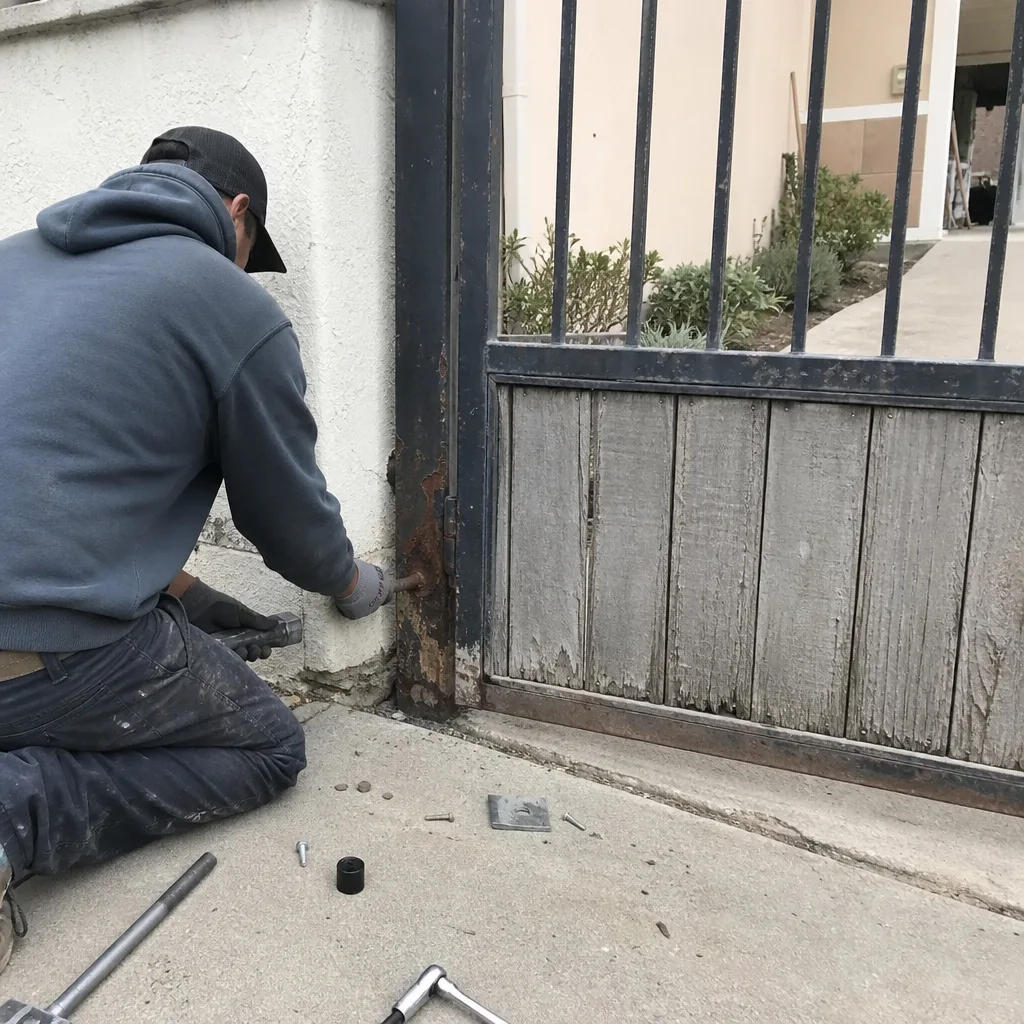 Before
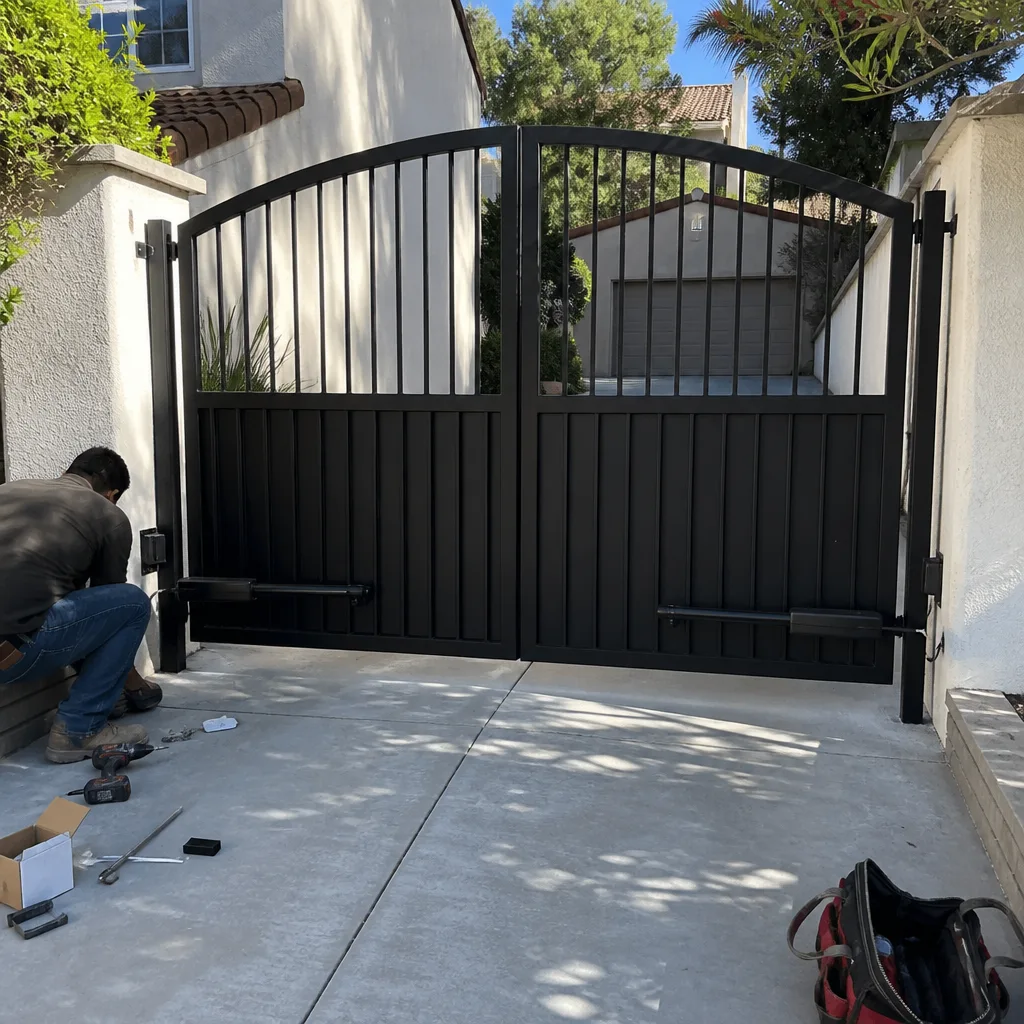 After
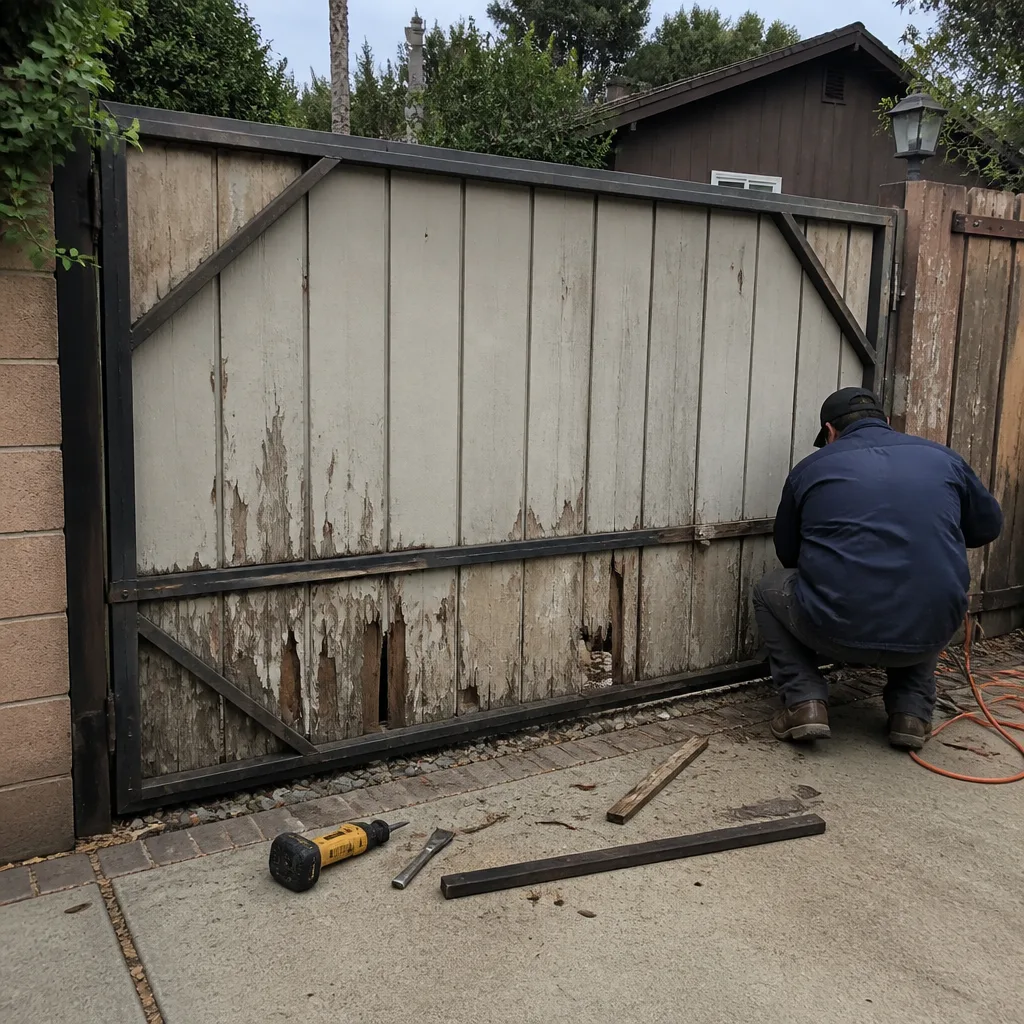 Before
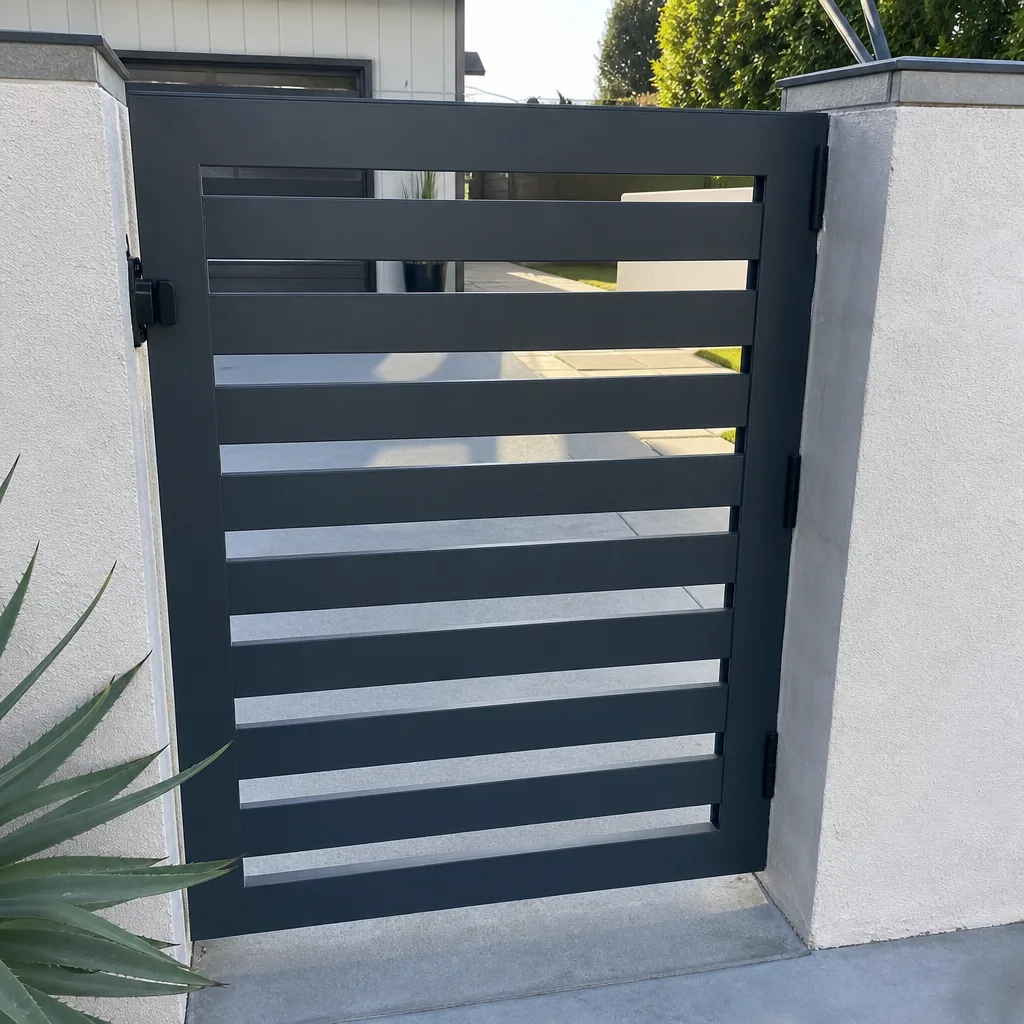 After
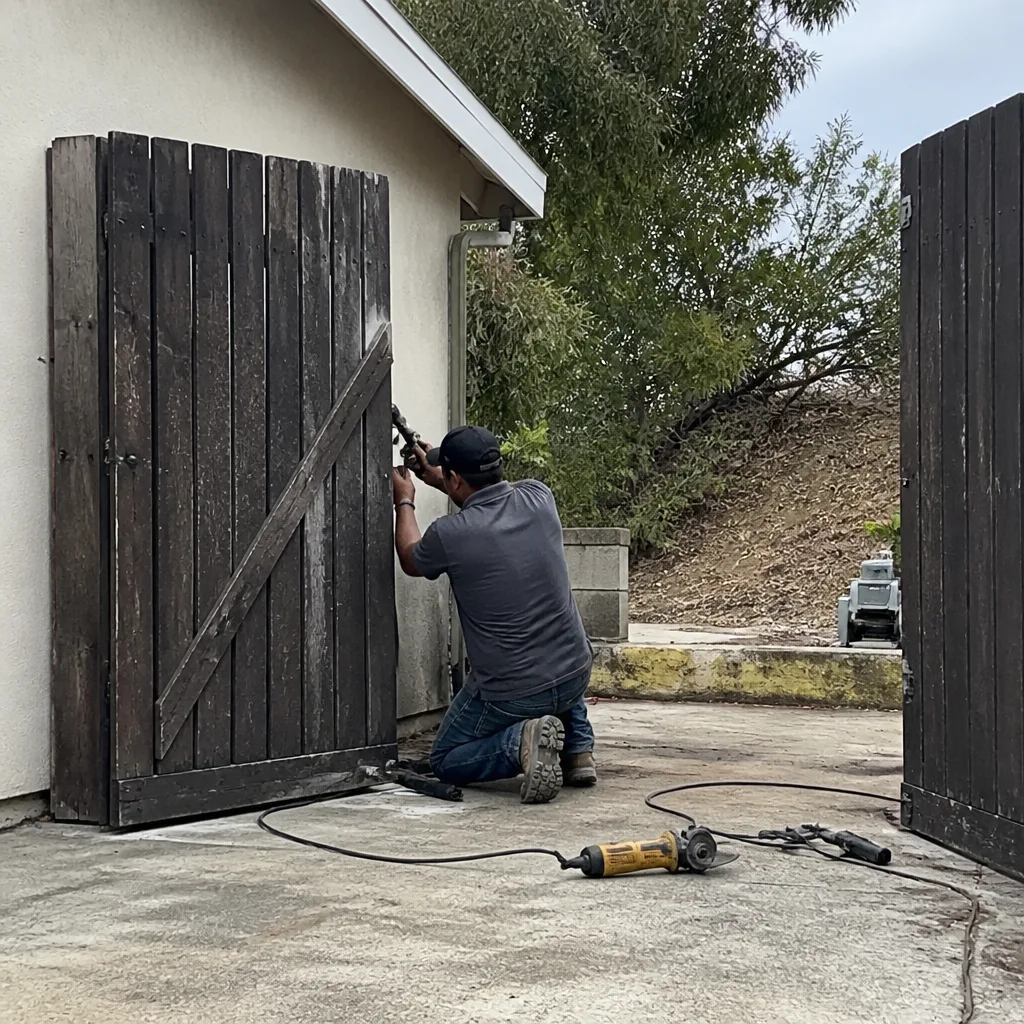 Before
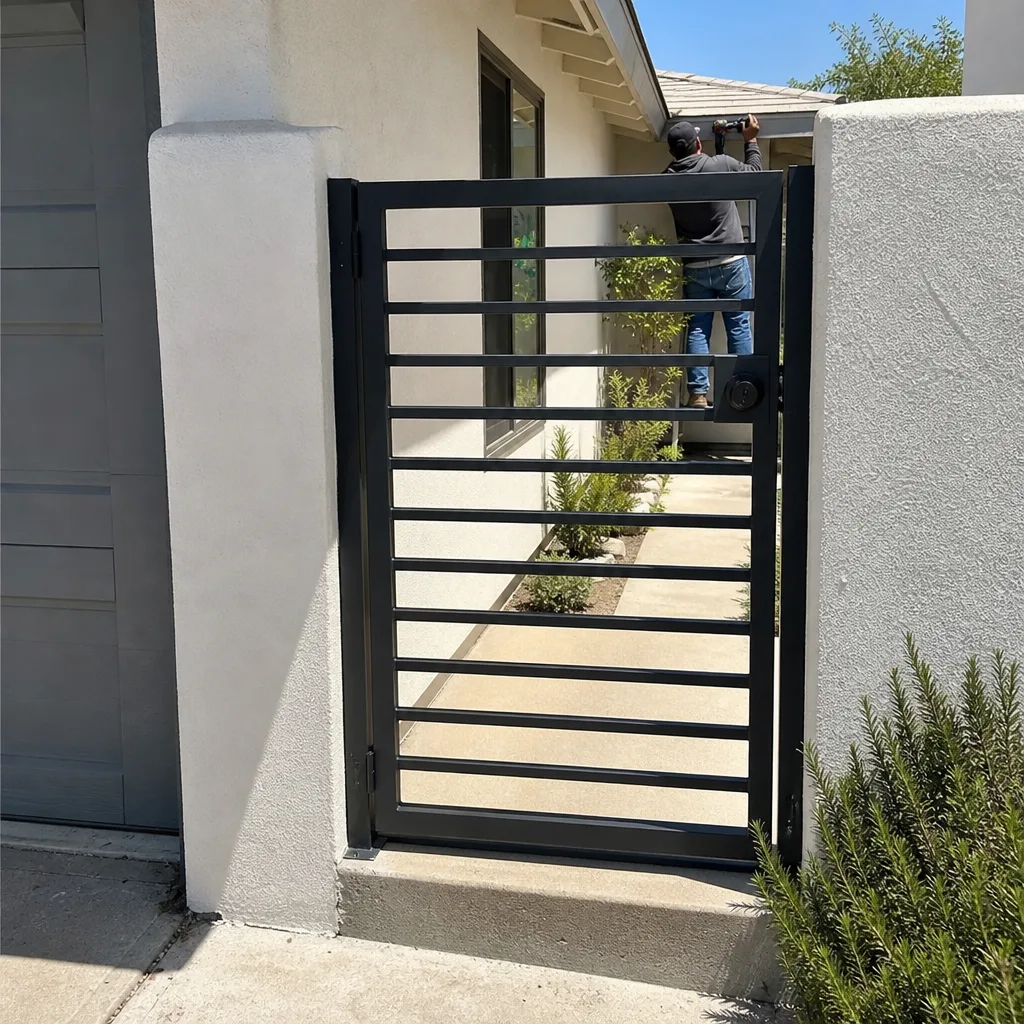 After