
Last updated November 2, 2026
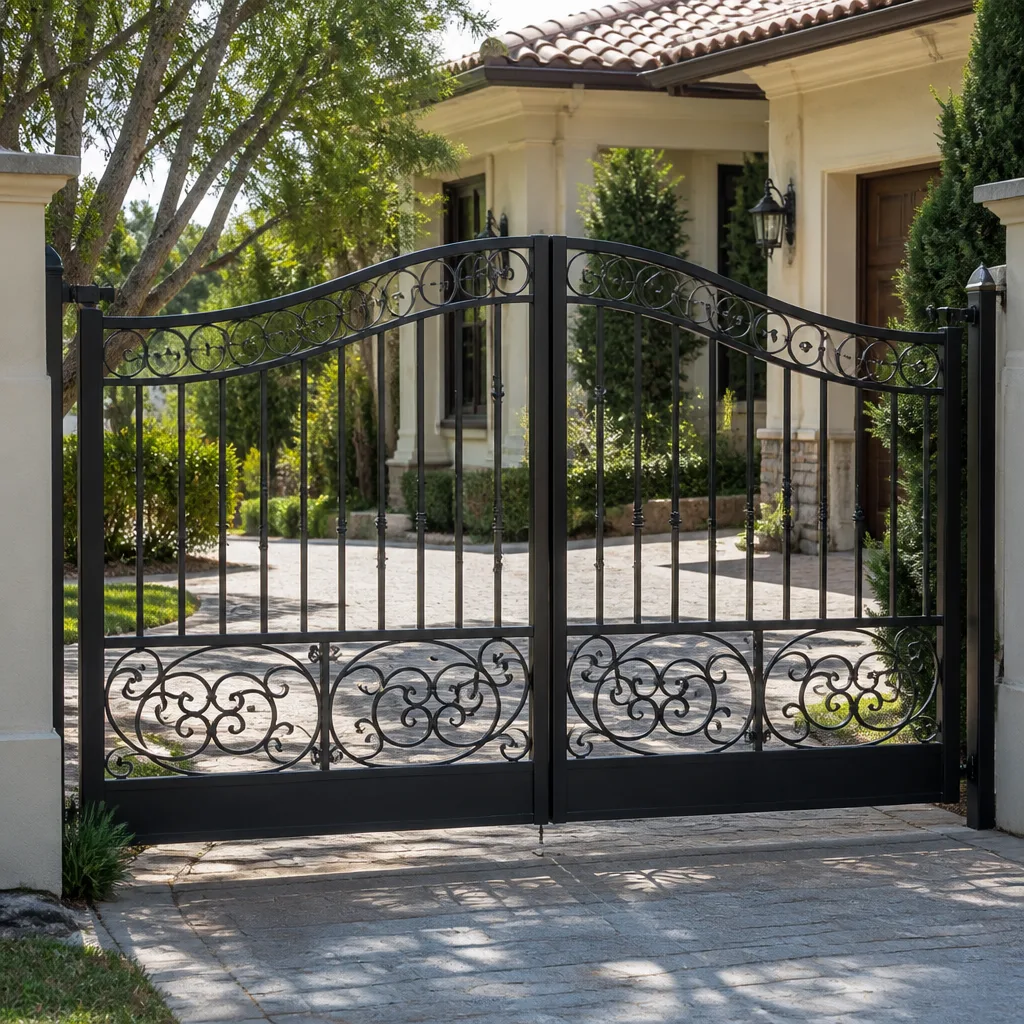 Wrought iron
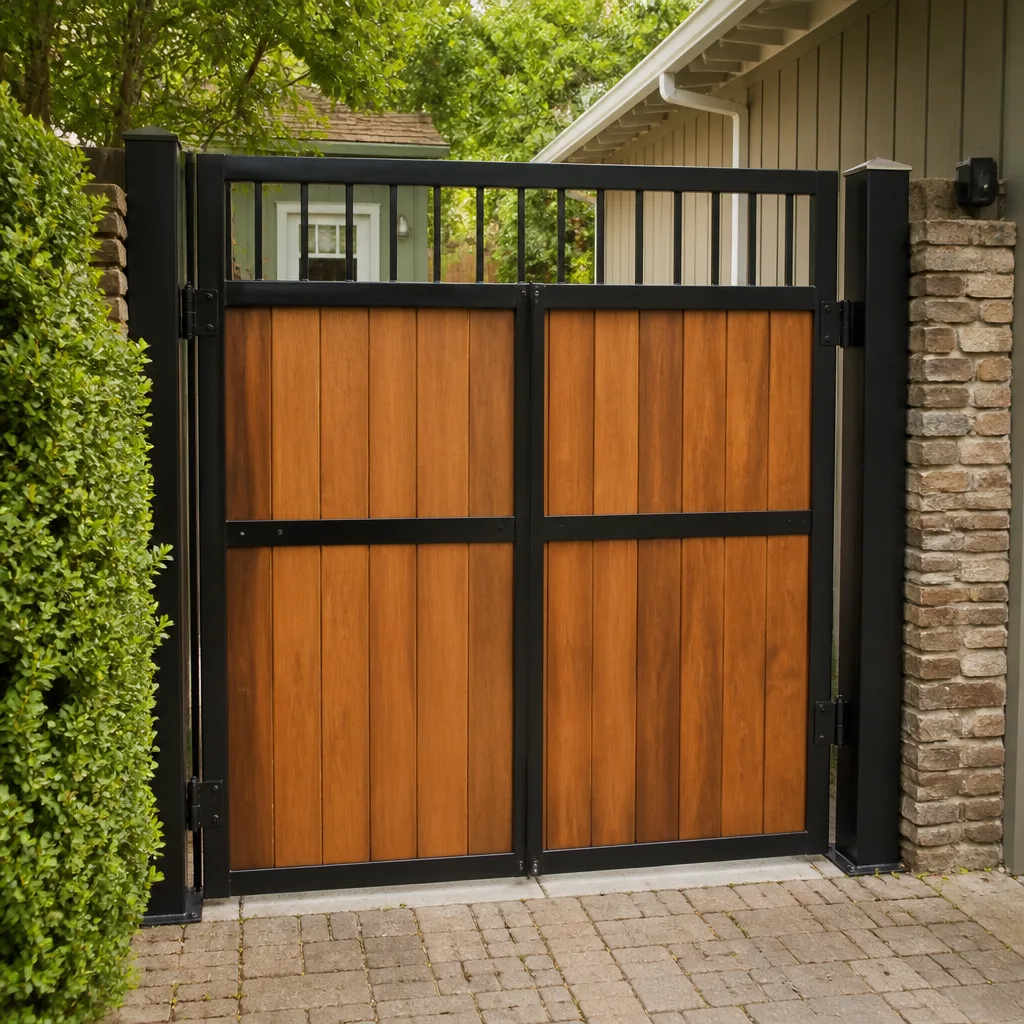 Wood & steel frame
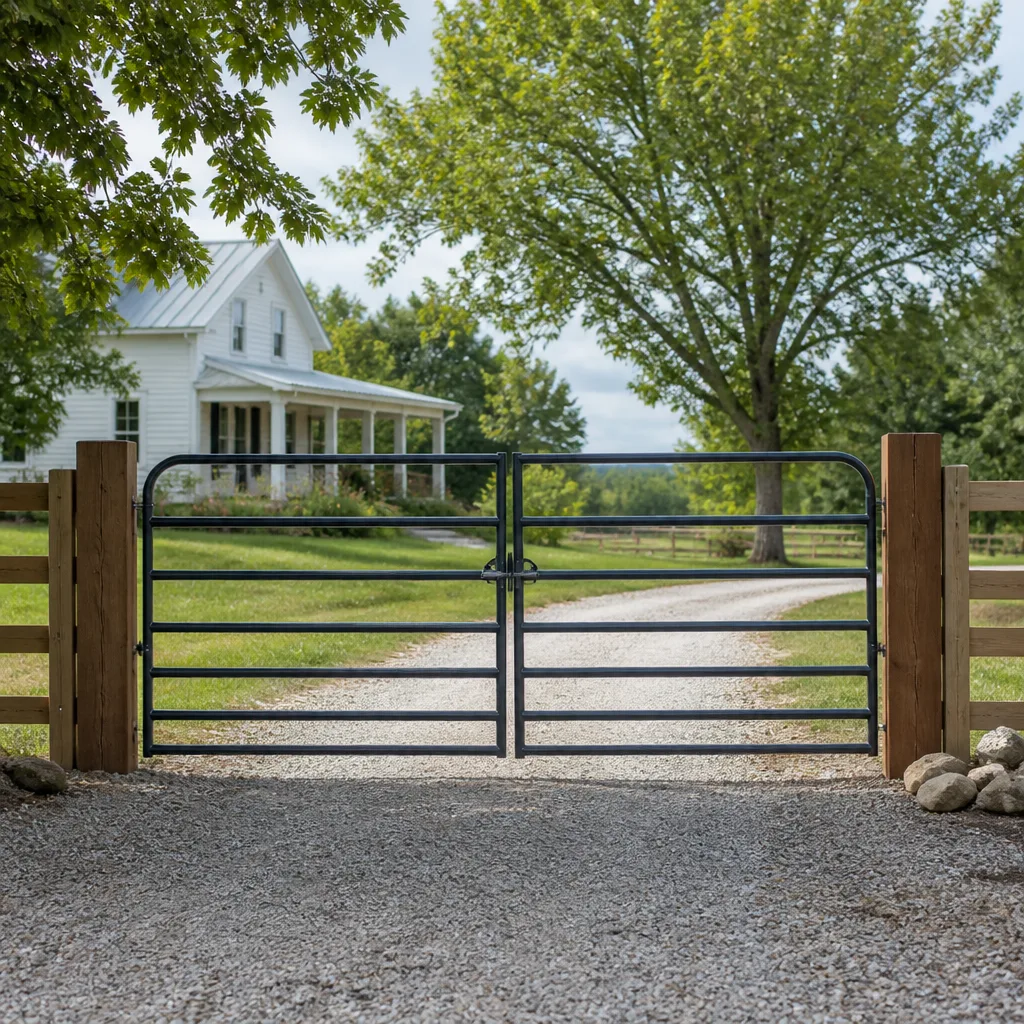 Farm & ranch
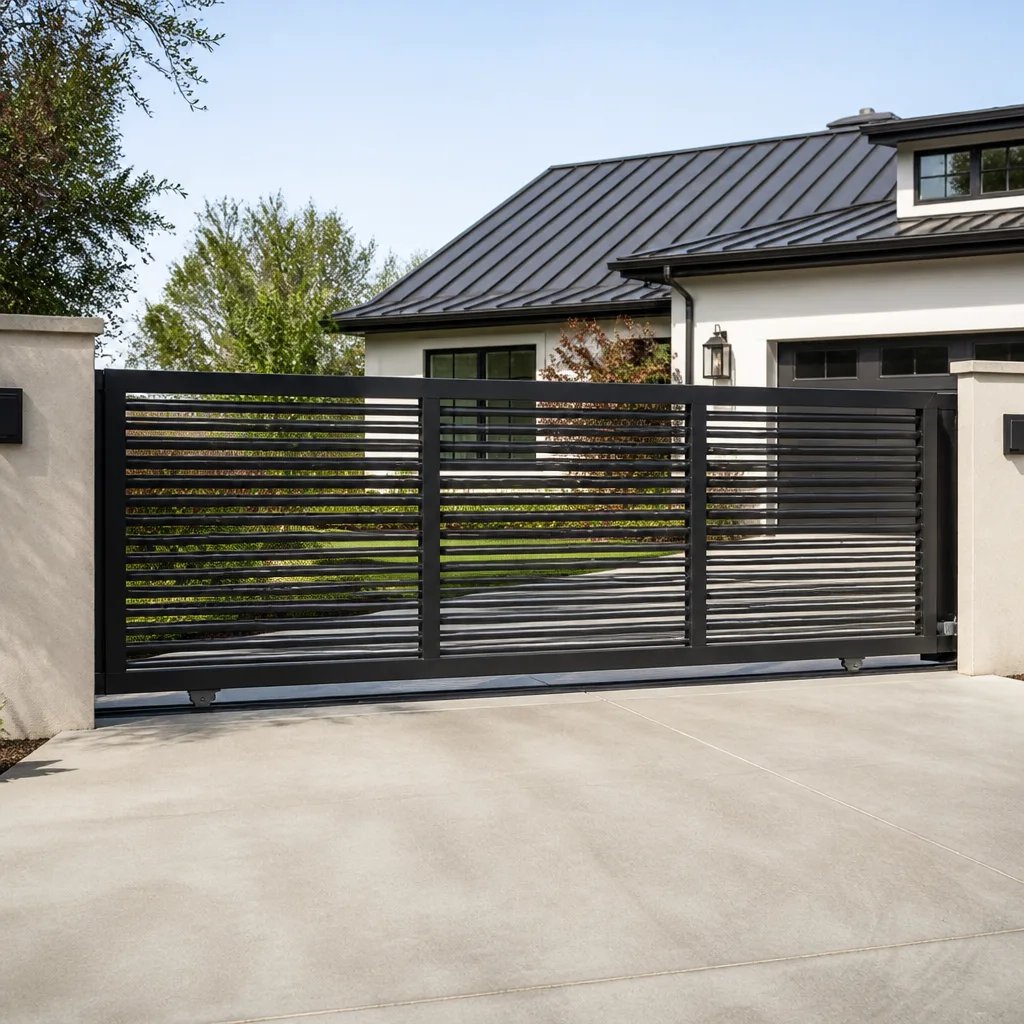 Sliding driveway gates
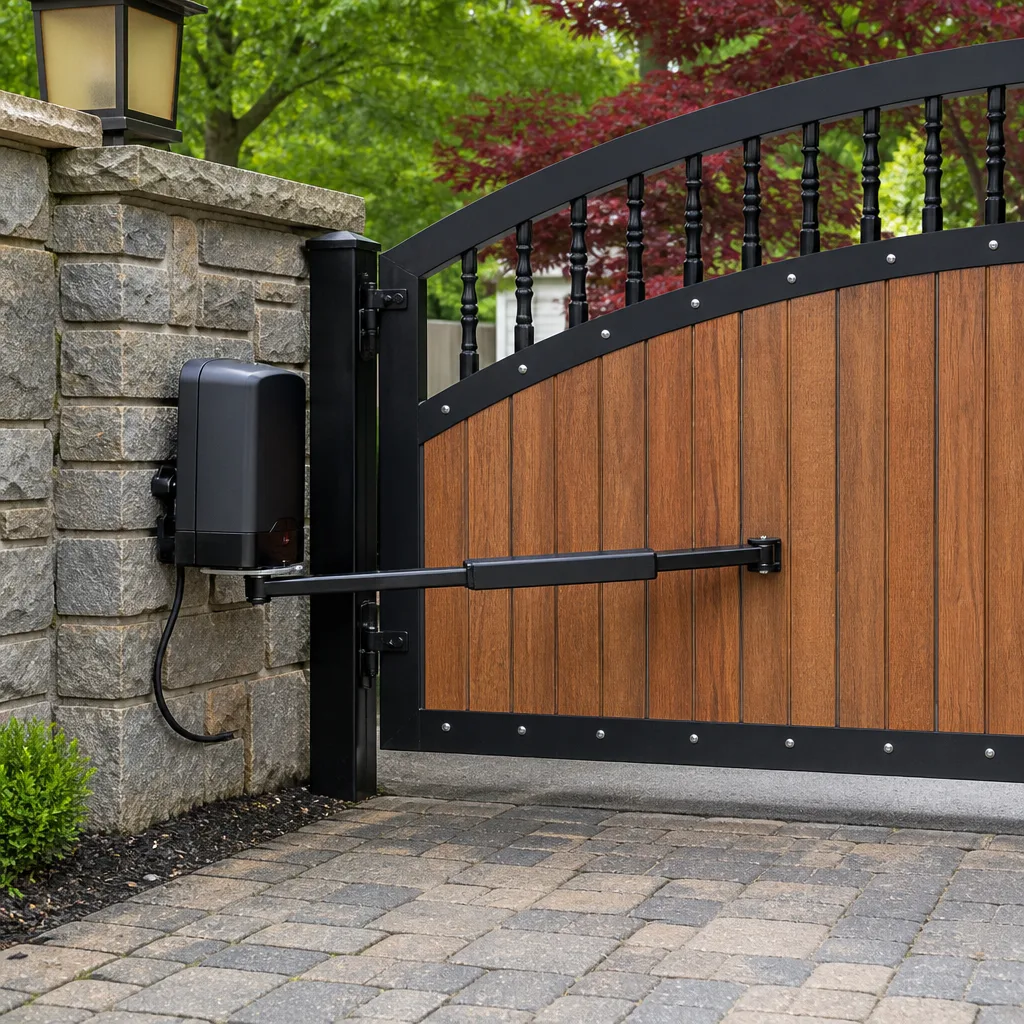 LiftMaster operators
Free on-site gate assessment - hinges, posts, and your LiftMaster or Nice gate operator checked before anything is quoted
The assessment is free and the quote is the invoice.
Get your free estimateThe Complete Gate Repair Guide for San Clemente Homeowners
A gate installed half a mile from the San Clemente coastline will corrode its hinge pins and operator terminals measurably faster than the same gate installed in Riverside. Most homeowners don’t find this out until the gate stops moving. This guide maps the full repair lifecycle for a San Clemente gate: what breaks first, why, and in what order. You’ll learn which components fail on a predictable schedule in our salt-heavy air, how to triage repairs without wasting money, and which brand-specific failure patterns we see in neighborhoods from Forster Ranch to Talega.
Styles & brands we work with
- Wrought iron
- Wood & steel frame
- Farm & ranch
- Sliding driveway gates
- LiftMaster operators
Quick Answer
Gate repair in San Clemente most often comes down to three coastal-specific culprits: corroded hinge pins from salt air, failed operator control boards from marine layer humidity, and misaligned photo eyes or edge sensors from soil movement on hillside properties. Most residential repairs run between $180 and $650 depending on the component, and the repair vs. replacement decision hinges on whether corrosion has spread past the hinges into the gate frame itself. Call (866) 282-7403 for a free estimate from a San Clemente gate specialist who already knows your brand.
Table of Contents
- Why San Clemente Gates Fail Faster Than Inland Gates
- The Repair Priority Ladder: What to Fix Now vs. What Can Wait
- Gate Systems Most Common in San Clemente and Their Failure Patterns
- Repair vs. Replacement: When Cumulative Corrosion Tips the Scale
- What to Document and Test Before Calling a Technician
- Electric Gate Repair: Control Boards, Loop Detectors, and Motors
- Materials That Hold Up Best in a Coastal Microclimate
- Common Mistakes to Avoid
- When to Call a Professional
- Frequently Asked Questions
- The Bottom Line
Why San Clemente Gates Fail Faster Than Inland Gates
Salt air is a slow abrasive. It doesn’t knock your gate over; it settles into the hinge pins, the spring coils, and the exposed terminals of your operator board, then works against the metal every single day. In San Clemente, the marine layer adds a second variable: humidity that condenses on cold steel surfaces each morning, especially from May through August. That moisture carries trace salt. It dries. The cycle repeats roughly 300 mornings a year. A gate in Riverside sees heat and dust, which do their own damage, but not the electrochemical corrosion that eats zinc plating off hinge pins and causes terminal screws to develop white crust within 18 to 24 months.
We’ve seen the pattern enough to map it with confidence. Here is the typical corrosion sequence on a San Clemente swing gate over a five-year window:
- Year 1 – 2: Surface oxidation on exposed hardware. Cosmetic at first. Hinge pins still functional but the finish is dulling and pitting.
- Year 2 – 3: Hinge pin wear accelerates as the protective coating fails. The gate starts to sag, dragging on the latch side or binding on the hinge side.
- Year 3 – 4: Electrical connections on the operator board show visible corrosion. The gate opens intermittently, or the remote works only at close range.
- Year 4 – 5: Without intervention, the gate frame itself begins to rust where water pools, especially at weld points and the bottom rail. Hinge replacement alone is no longer enough.
The takeaway for San Clemente homeowners: your gate is on a faster maintenance clock than the manufacturer’s national average assumes. A hinge that would last 10 years in Temecula may need attention at year 4 here. This guide exists because the generic advice most homeowners find online was written for a national audience that doesn’t live half a mile from the Pacific.
Our team at Gate Repair in San Clemente diagnoses coastal corrosion every week. The patterns are consistent enough that we can often predict what a technician will find before the truck arrives.
The Repair Priority Ladder: What to Fix Now vs. What Can Wait
Not every gate problem is an emergency. Some require immediate attention to prevent cascading damage. Others can wait a few weeks without any meaningful consequence. Understanding the difference saves money and prevents a small issue from turning into a full gate installation job.
Here is the priority ladder we use when a San Clemente homeowner calls us about a malfunctioning gate:
- Immediate: Gate off its track or hanging from a single hinge. A sliding gate that has jumped its track can fall. A swing gate held by one hinge is a safety hazard. Shut off power to the operator and secure the gate if possible. Call same day.
- Immediate: Operator making grinding or clicking sounds while the gate stays still. This usually means the motor is running against a jammed gear or broken chain. Continued operation will burn out the motor, tripling the repair cost.
- Urgent (within 48 hours): Photo eyes or safety edges failing intermittently. A gate that reverses without cause or refuses to close points to a failing safety sensor. This is a safety issue, especially with children or pets on the property.
- Urgent (within a week): Remote range dropped from 50 feet to 10 feet. This often signals corrosion on the receiver antenna or control board terminals. Left unaddressed, the board may fail completely.
- Can wait 30 days: Surface rust on non-structural areas. Sanding and treating surface rust on the gate frame is prudent but not urgent. Structural weld rust is different; that warrants a closer look.
- Can wait 30 days: Cosmetic sag that doesn’t affect operation. A quarter-inch sag that doesn’t cause dragging or binding can be scheduled rather than rushed.
The principle underlying this ladder is simple: anything that forces the motor to work harder, or compromises the gate’s physical stability, accelerates every other failure on the gate. A gate that binds at the latch is also stressing the operator. Fix the binding now, or replace the operator later.
Gate Systems Most Common in San Clemente and Their Failure Patterns
San Clemente’s gate inventory breaks down into a few recognizable groups: HOA entrance gates, hillside estate gates, and single-family driveway gates. Each has its own typical failure profile.
HOA and community entrance gates in neighborhoods like Talega and Marblehead are almost always slide gates, usually with a commercial-grade operator. These gates cycle dozens or hundreds of times a day. The primary failure points are the slide track, the drive chain or belt, and the loop detectors buried in the asphalt. A track that collects sand from coastal winds will wear the guide rollers faster. Loop detectors fail when the saw-cut channel admits moisture, which corrodes the wire and produces false detection or no detection.
Hillside estate gates, common in the eastern hills and along Avenida Salvador, are frequently oversized swing gates running on operators from brands like BFT, FAAC, or Linear. These gates are heavy, often 14 to 18 feet per leaf. The failure pattern here is usually hinge-related first, motor-related second. A heavy gate hung on salted hinge pins will start to sag and bind. The operator then works against the bind, the motor heats beyond design tolerance, and the capacitor or control board eventually fails. We work on your brand, not around it, which means we can often source the correct capacitor or board without rewriting the whole operator.
Residential driveway gates in neighborhoods like Forster Ranch tend toward smaller swing gates on operators from Ghost Controls, Mighty Mule, or Viking. The most common call we field from these systems is intermittent opening, followed by battery failure on solar-powered units. San Clemente’s marine layer reduces solar gain during morning hours, which means a solar panel that works fine in San Diego may not keep up with our coastal overcast. We see this pattern routinely.
Every brand has a failure personality. Viking units often fail at the limit switches first. Linear operators are robust mechanically but their control boards are sensitive to power surges. Ghost Controls is a strong residential brand, but their battery harness connections are prone to corrosion in salt air. When you call a technician who services San Clemente gates specifically, these patterns are already part of the diagnostic conversation.
Repair vs. Replacement: When Cumulative Corrosion Tips the Scale
This is the question every gate owner eventually faces: keep fixing the old gate, or start fresh. The answer in San Clemente is usually determined by one thing: how far the corrosion has traveled.
Here is a practical framework we use when advising homeowners:
Repair is the right call when:
- The gate frame is structurally sound, meaning no perforation rust or holes at the weld points.
- The corrosion is limited to replaceable components: hinge pins, brackets, springs, operator parts.
- The operator is less than 8 years old and parts are still available.
- The total repair cost stays under 40% of a comparable new gate and operator.
Replacement is more cost-effective when:
- Rust has breached the gate frame at the bottom rail or weld joints. Patching is a temporary measure at best in salt air.
- The operator has failed for the second time in 18 months, especially if the first failure was a control board.
- The gate has sagged beyond hinge adjustment and a weld repair would compromise the powder coat.
- You’ve inherited an operator from a brand with discontinued parts, and every fix requires adaptation.
We tell our San Clemente customers that replacement isn’t a loss. It’s an opportunity to install components selected for the coastal environment: stainless hinge hardware, a marine-grade control board enclosure, and an operator sized for the gate’s true weight. If you’re weighing this decision, our gate installation service includes an honest assessment of whether the existing frame is worth saving. Sometimes the cheapest repair is the one you don’t repeat.
What to Document and Test Before Calling a Technician
A service call goes faster and costs less when the homeowner arrives with useful information. Here is what to document and test before you pick up the phone:
- Note the exact behavior. Does the gate open but not close? Close but not open? Grind, hum, or click? Write down what you observe, not what you assume. The distinction between “humming” and “clicking” tells us a lot about whether the motor or the capacitor is the issue.
- Test the manual release. Most operators have a manual release handle or key. Disengage the operator and try pushing the gate by hand. If it moves freely, the problem is the operator. If it binds or drags, the problem is mechanical: hinges, rollers, or track.
- Check the breaker. A surprising number of gate failures are a tripped GFCI breaker, especially after rain or a power surge. Check the outlet or panel that feeds the operator.
- Inspect visible wiring. Look for exposed wires near the operator, especially at the terminal block. White or green corrosion on terminals is a common San Clemente finding.
- Check the battery on solar units. If you have a solar-powered operator, note whether the battery has been replaced in the last two years. Marine layer overcast accelerates battery degradation.
- Photograph the nameplate. The brand, model number, and serial number on the operator are worth more than any verbal description. Take a photo before you call.
This kind of up-front information turns a discovery visit into a diagnosis visit. When we arrive with the right parts on hand, the gate is back to working before you know it. For technical help over the phone, call (866) 282-7403 and describe what you’ve found.
Electric Gate Repair: Control Boards, Loop Detectors, and Motors
Electric gate repair is the most technical side of our work, and it’s where the difference between a gate specialist and a generalist handyman becomes obvious. An electric gate operator is a small industrial machine: motor, gearbox, limit switches, control board, transformer, receiver, and in many cases a loop detector and intercom interface. Diagnosing an electric gate failure without a systematic understanding of these components is how gate boards get misdiagnosed and replaced unnecessarily.
Control boards are both the brain and the most common electrical failure point. They fail in San Clemente for two predictable reasons: power surge damage during coastal storms and corrosion on the board’s connection terminals from persistent humidity. A board with green fuzz on its screw terminals may still work, but it’s living on borrowed time. If your remote works only from a few feet away, if the gate opens but won’t close, or if the warning beeper sounds without gate movement, the board is the prime suspect.
Loop detectors are the devices that sense a vehicle and hold the gate open until the car clears. They’re buried under the driveway in a saw-cut loop of wire. Failure symptoms include the gate closing on a car, the gate refusing to open for a vehicle, or the gate staying open continuously. Loop repair involves testing the loop’s resistance, and if the wire is broken from soil movement or moisture ingress, either splicing the loop or installing a new one.
Motors fail either from mechanical overload or from years of exposure. A motor that groans and struggles is often the victim of a binding gate, not a bad motor. Replacing the motor without fixing the bind dooms the new motor to the same fate. On the other hand, a motor that clicks and does nothing may have a failed start capacitor, which is a relatively inexpensive fix on many Viking and Linear units.
Our electric gate repair workflow is a systematic diagnostic pass across the entire system, from breaker to board to motor to mechanical assembly. Because we service nine brands including BFT, Linear, Viking, and Ghost Controls, we arrive with the brand-specific reference knowledge that turns a two-visit repair into a one-visit fix.
Materials That Hold Up Best in a Coastal Microclimate
If you’re repairing or replacing components on a San Clemente gate, material selection matters more than anywhere inland. The wrong hardware fails on an accelerated schedule, and you’ll pay for it twice.
Stainless steel hardware is the single best upgrade for a coastal gate. Stainless hinges, brackets, and fasteners resist the salt-air corrosion cycle that destroys zinc-plated steel. The cost difference is modest: a set of stainless hinge pins may run $20 to $40 more than zinc-plated, but they’ll outlast them three or four times over in San Clemente’s climate.
Powder-coated aluminum is the best material for the gate frame itself. Aluminum doesn’t rust the way steel does, and a quality powder coat holds up to UV exposure remarkably well. Steel gates can survive coastal conditions with diligent maintenance, but they require a level of care most homeowners won’t sustain year after year.
Marine-grade electronics enclosures protect the operator’s control board from the humid morning air. A standard plastic or powder-coated steel enclosure may allow enough moisture ingress to corrode terminals over time. Upgrading to a gasketed, marine-rated enclosure is one of the most cost-effective protective measures available.
UV-stabilized plastics matter in San Clemente more than inland. The sun here is intense year-round, and plastic limit switch housings, photocell covers, and keypad faces will embrittle and crack if they’re not UV-stabilized. When replacing these small parts, insist on components from the original manufacturer rather than budget aftermarket replacements.
This material guidance applies to every repair decision you make. A $30 hinge pin is not a place to save money when the labor to replace it costs four times that.
Common Mistakes to Avoid
- Lubricating hinges without cleaning them first. Spraying penetrating oil over accumulated salt and sand creates a grinding paste that accelerates pin wear. Clean the hinge, then lubricate.
- Replacing the operator when the gate is binding. A new operator on a sagging, dragging gate inherits the same stress that killed the old one. Fix the mechanical issue first.
- Ignoring intermittent behavior. A gate that fails once a week and then recovers is not healing itself. The underlying cause is advancing, and intermittent failures are harder to diagnose later than they are now.
- Buying aftermarket parts for brand-specific systems. A generic control board adapter may work for a while, but it introduces unpredictable behavior. San Clemente gates face enough environmental stress without adding component mismatches.
- Assuming a tripped breaker is just a fluke. A breaker that trips once is often meaningful. It may point to moisture in the junction box or a motor drawing excess current. Investigate rather than reset and forget.
- Waiting to replace a gate that has visible frame rust. Once rust perforates the bottom rail, patching is a stopgap. The repair cost you defer becomes a replacement cost you can’t avoid.
- Hiring a generalist to save money. A handyman who installs gates occasionally doesn’t carry the brand-specific parts or the diagnostic pattern knowledge that a gate specialist brings. Gate Repair San Clemente focuses exclusively on gates, so the diagnosis comes faster and the fix uses the right parts the first time.
When to Call a Professional
Call a professional when the gate is heavy, powered, and misbehaving. Hinges on a 300-pound gate are not a DIY job. A spring under tension can release suddenly and cause serious injury. Electric operators contain capacitors that hold a charge even after the power is off. If the gate is off its track, hanging from one hinge, making grinding noises, or failing to respond to the remote, these are not conditions to troubleshoot with an online video. Safety sensors, loop detectors, and control boards require diagnostic equipment and brand-specific knowledge. Gate Repair San Clemente offers free estimates in San Clemente. Call (866) 282-7403 and describe the symptom. We’ll give you an honest read on whether it’s urgent, whether it can wait, and what the likely repair path looks like.
Frequently Asked Questions
Most residential gate repairs in San Clemente run between $180 and $650 depending on the component. A hinge replacement typically costs $180 to $350, a control board replacement $250 to $600, and a motor replacement $350 to $800. The exact quote depends on the brand, the gate’s weight, and whether corrosion has spread to adjacent components. Call (866) 282-7403 for a free estimate, and we’ll quote the price before any work begins.
Yes, we offer same-day service for urgent repairs in San Clemente when a gate is off its track, hanging unsafely, or the operator is actively failing. Call (866) 282-7403 and describe what’s happening; we’ll tell you if it’s a same-day priority or can be scheduled.
A gate that opens partway and stops usually points to a failed limit switch, a misaligned limit cam, or a mechanical bind that trips the overload circuit. On some Viking and Linear units, a corroded limit switch contact will produce exactly this behavior. It’s a repairable issue that worsens if left unchecked.
No brand is immune to coastal conditions, but operators with marine-rated control board enclosures and robust terminal coatings fare best. BFT and Linear both offer models that hold up well in San Clemente when installed with a quality enclosure. The installation details matter as much as the brand: stainless hardware and sealed wiring are as important as the operator name.
Yes, our gate installation service includes the power connection in the operator enclosure, safety edges, photo eyes, and intercom integration where needed. We don’t subcontract the electrical or sensing work; it’s done by the same gate specialists who do the repair work.
Most residential repairs in San Clemente take between 60 and 90 minutes once the technician arrives with the right part. Hinge replacements, limit switch adjustments, and remote reprogramming are typically same-visit fixes. Control board or motor replacements may require a second visit if the part is not in stock locally.
The Bottom Line
San Clemente gates fail on a faster, more predictable schedule than gates almost anywhere else in Southern California. Salt air attacks the hinges. Marine layer humidity attacks the electronics. UV exposure attacks the plastics and finish. Understanding this cycle, and acting at the first sign of hinge wear or intermittent operation, is the most effective way to control repair costs. The right time to address a gate problem is the first time it appears, not the third time it repeats itself. If your gate is sagging, grinding, or ignoring the remote, call Gate Repair San Clemente at (866) 282-7403. We know the brands, we know the climate, and we’ll get your gate back to working before you know it.
Written by the team at Gate Repair San Clemente, serving San Clemente since 2012. Our specialists service LiftMaster, FAAC, BFT, Linear, Viking, Ghost Controls, DoorKing, Elite, and Mighty Mule gate systems across residential and commercial properties. Start at our Gate Repair San Clemente home for an overview of all services.
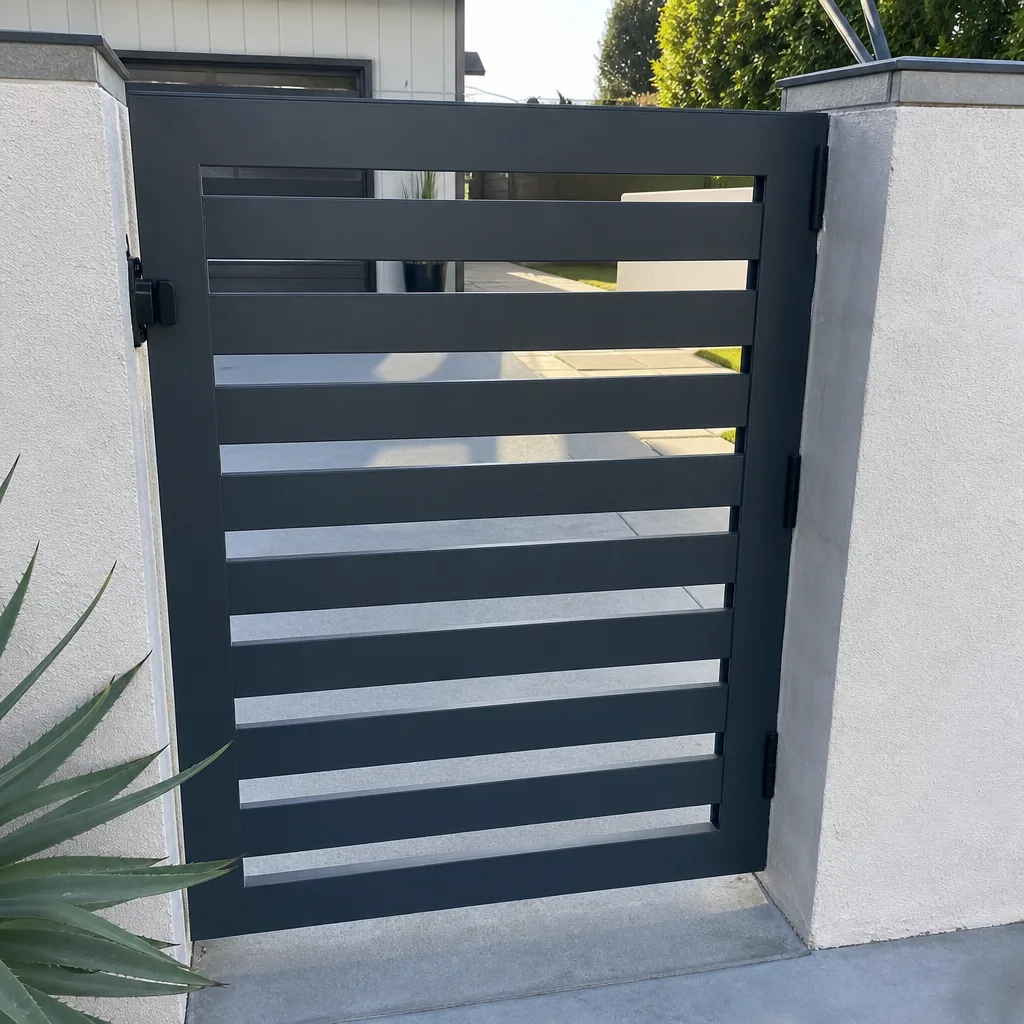
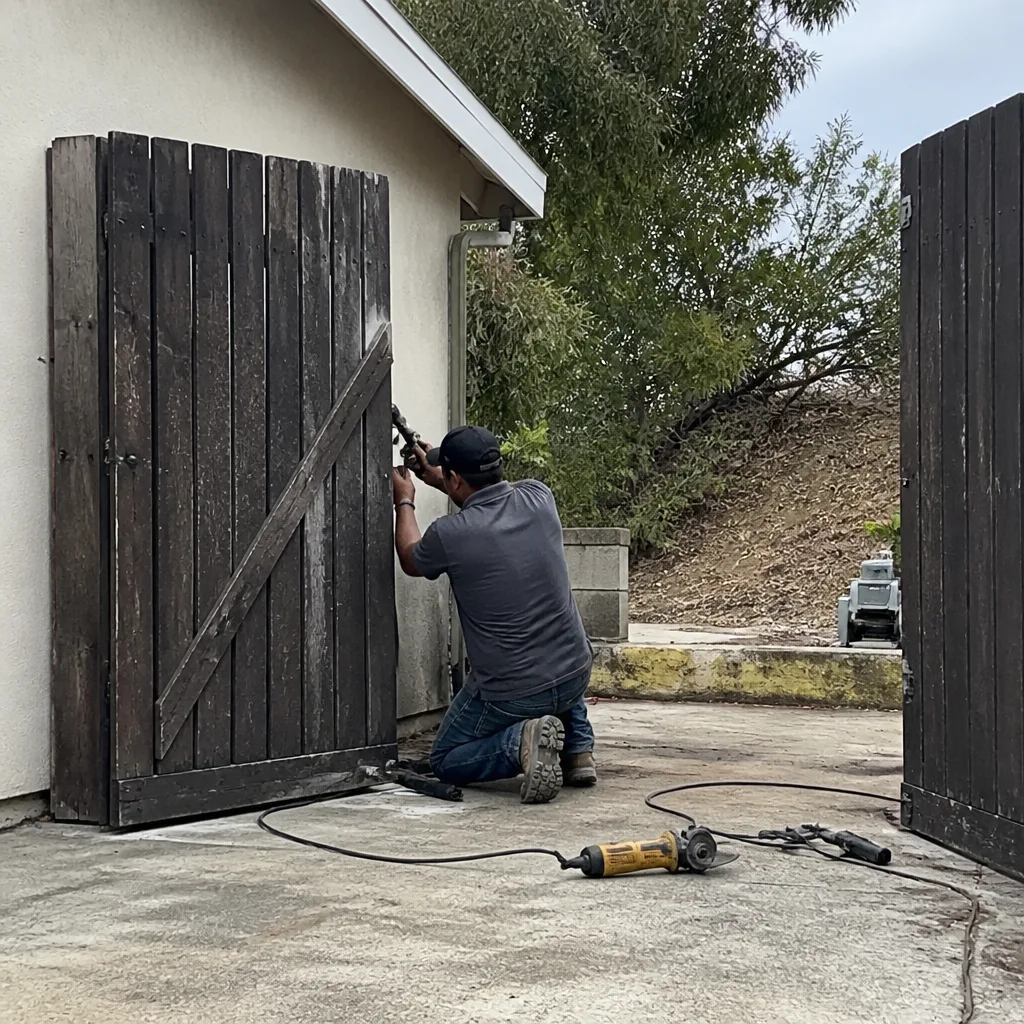
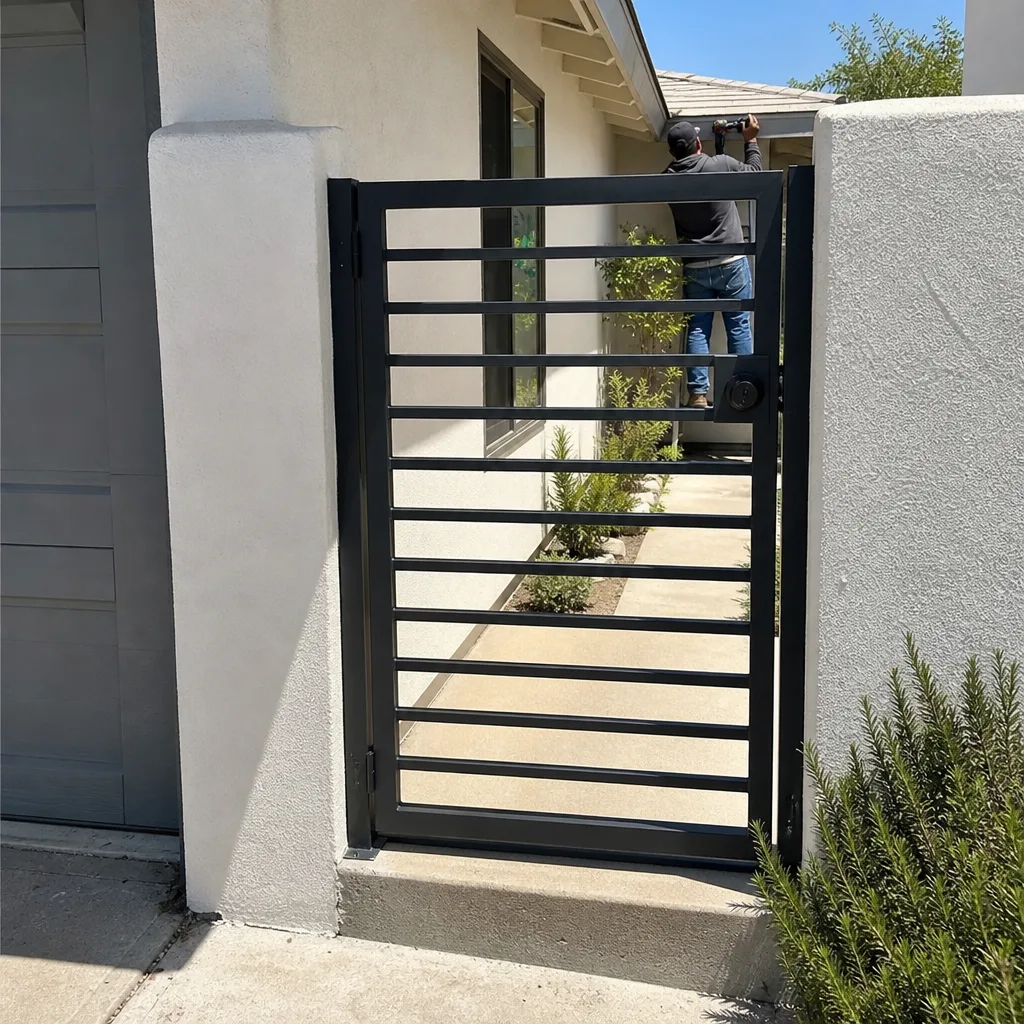
See the difference
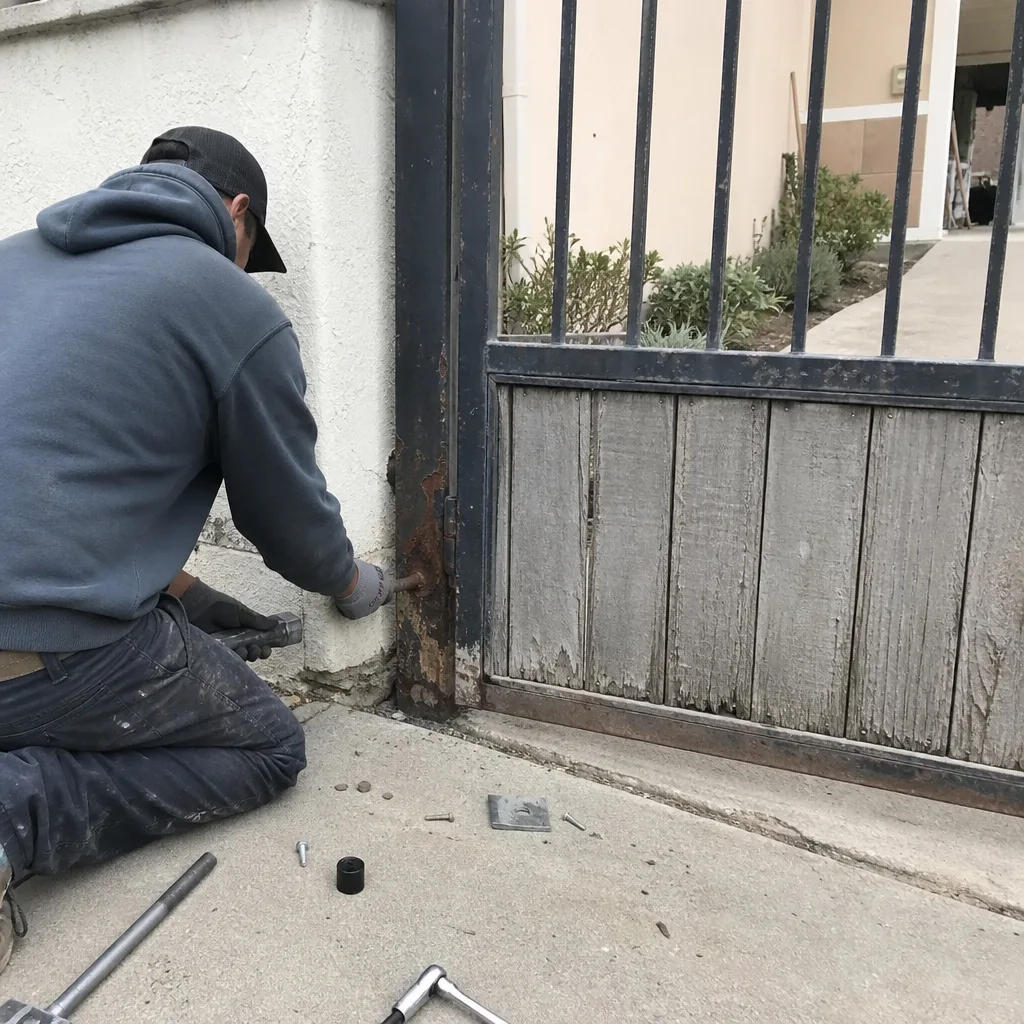 Before
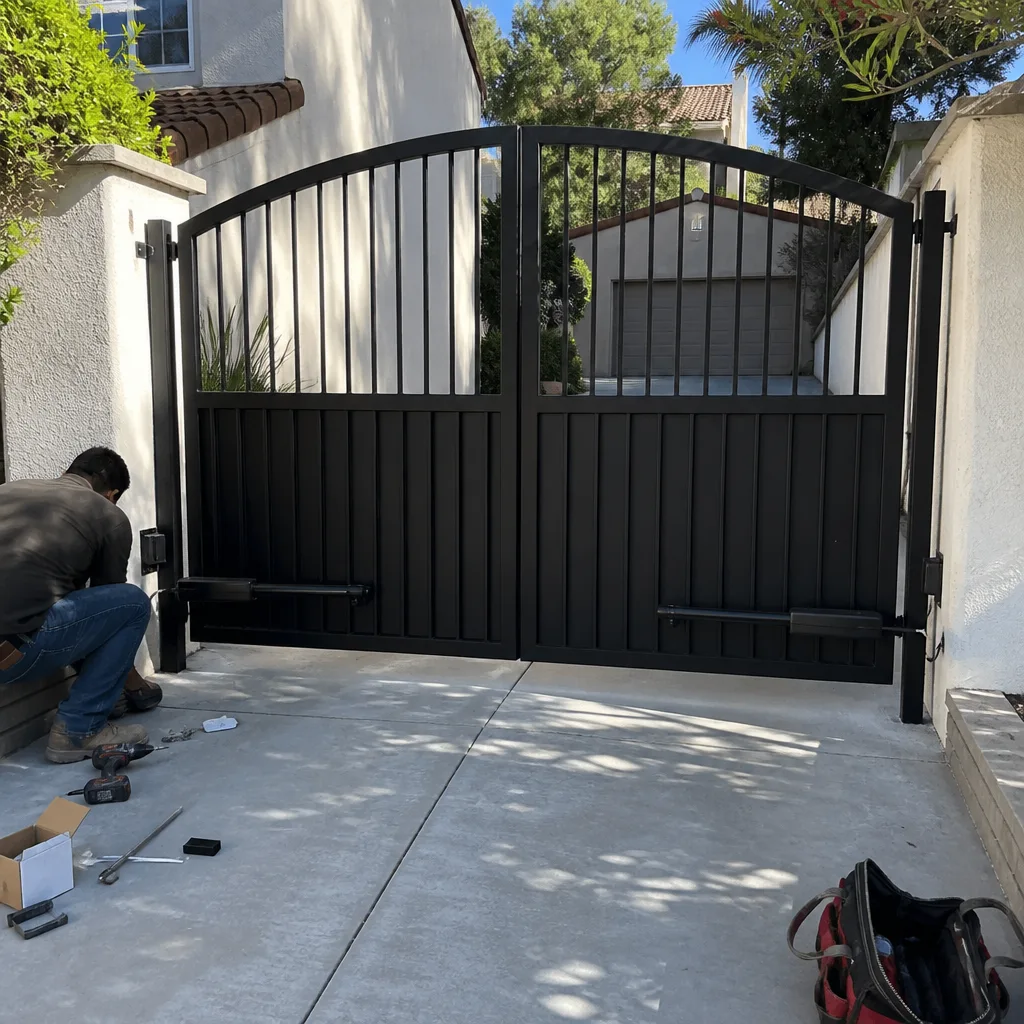 After
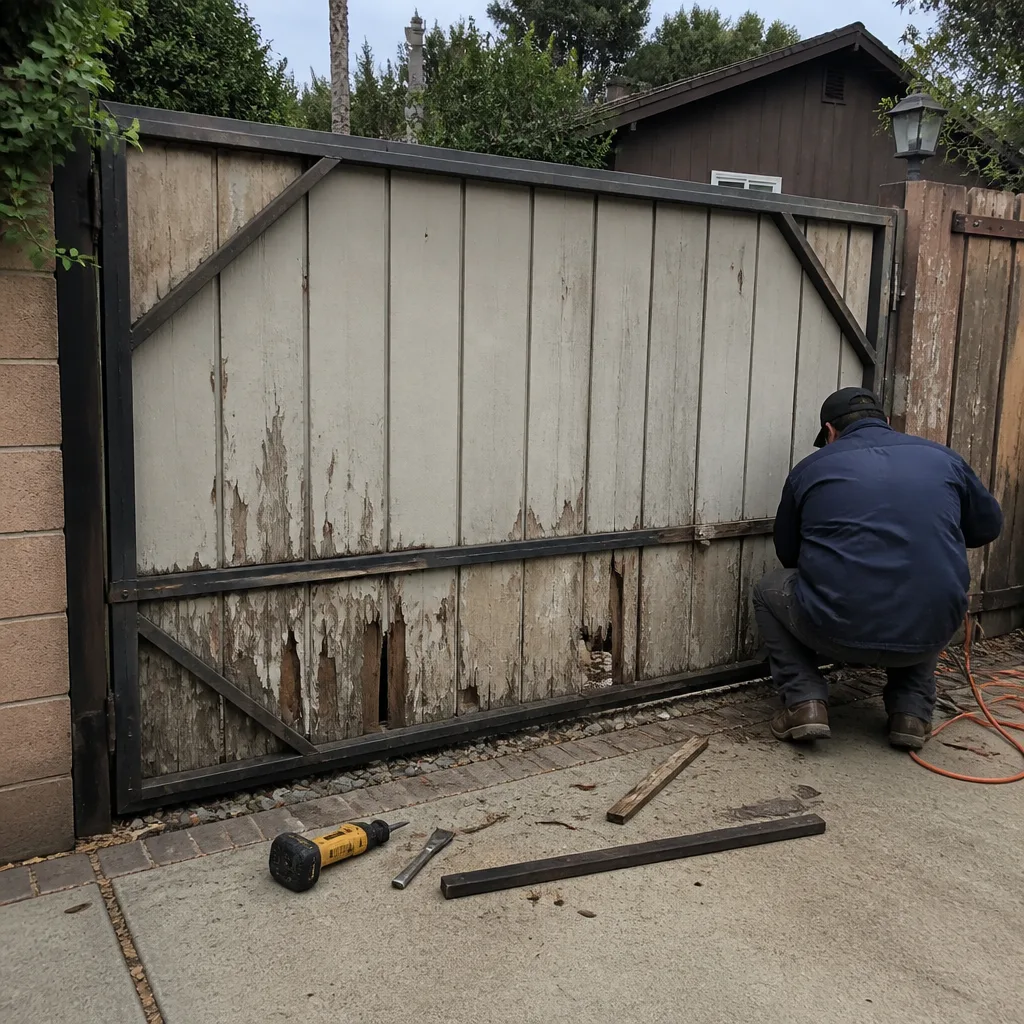 Before
 After
 Before
 After